Macerator pumps face a difficult duty cycle. They shred solids, handle fibrous waste, and often operate in wet, noisy environments. A small change in sound can precede ragging, bearing wear, seal damage, or impeller imbalance. This makes AI-driven acoustic monitoring for macerator pumps increasingly relevant to plant operators seeking earlier warnings and fewer emergency callouts.
The U.S. Department of Energy’s Operations & Maintenance Best Practices Guide reports that predictive maintenance can reduce maintenance costs by 25–30% compared with reactive maintenance. It also associates predictive strategies with 35–45% less downtime. These figures support the business case, although macerator-pump results vary by installation, sensor quality, and operating conditions. The pump does not always fail neatly.
Acoustic-emission specialist Dr. Joseph H. Pollock describes acoustic emission as “the sound that materials make when they are under stress.” His principle fits macerator applications, where friction, impact, cavitation, and obstruction can create changing ultrasonic and audible signatures. Modern AI models can compare those signatures with operating speed, load, vibration, and flow data. The result is more practical than a simple alarm.
Field experience still matters. A sensor mounted beside a loud motor may capture background noise instead of pump distress. Poor labeling can also train an algorithm to repeat human mistakes. Therefore, reliable deployment needs baseline recordings, clean maintenance records, site-specific validation, and technician review. This 2026 overview examines leading systems, evidence, limitations, and real-world use cases for AI-driven acoustic monitoring for macerator pumps. Expect useful progress, not magic.
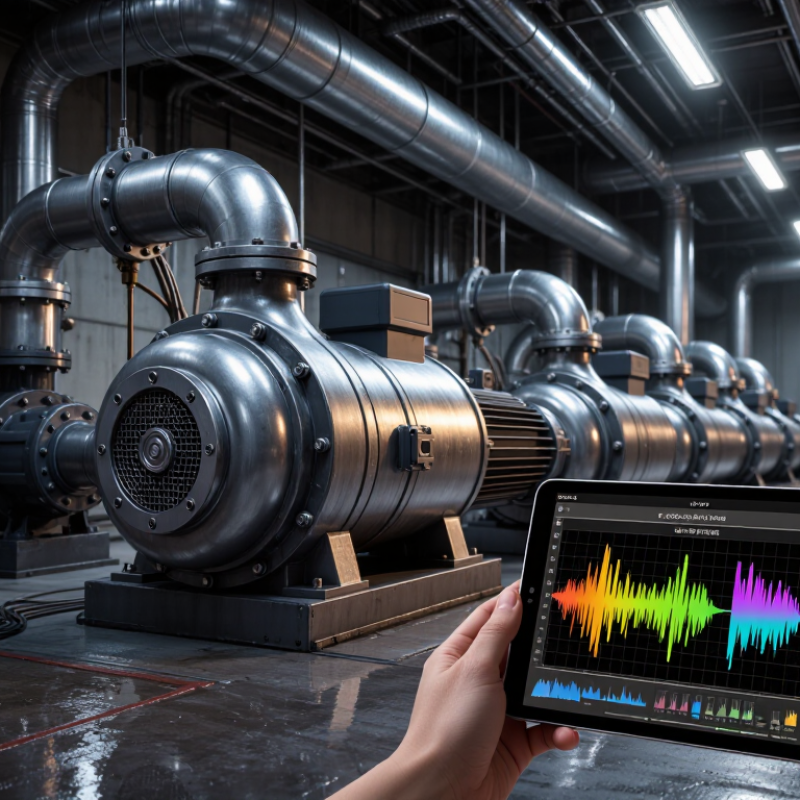
AI-driven acoustic monitoring is reshaping maintenance for macerator pumps in wastewater systems. A contact sensor or ultrasonic microphone can capture energy from 20–100 kHz. This range often reveals early mechanical changes before visible flow problems appear. Technicians can compare live signals with a healthy operating baseline. Temperature, pump speed, valve position, and load should be recorded beside every acoustic reading.
Blockage usually creates uneven, pulsing sound as fibrous material restricts the cutting chamber. The signal may show repeated impacts, rising low-frequency noise, and longer discharge cycles. Cavitation sounds different. It often produces a sharp crackling pattern with high-frequency bursts. Low suction pressure, air entry, or poor inlet conditions may support that diagnosis. Yet acoustic signatures overlap. A damaged bearing can imitate blockage under certain loads.
Site experience matters. Pipe resonance, nearby valves, and wet-room echoes can distort ultrasonic measurements. My early tests produced false alarms when the sensor touched a vibrating support bracket. The model was not wrong; the installation was weak. Local training data improves reliability, especially across changing flow rates. Artificial intelligence should flag unusual patterns, not replace inspection. Operators still need to check the cutter, inlet, seals, and discharge line. The data can mislead.
AI-driven acoustic monitoring is becoming more practical for macerator pumps in 2026. The sensor design matters as much as the software. A 192 kS/s acquisition rate captures sharp cutter impacts, bearing friction, and short cavitation events. These sounds may disappear inside ordinary low-speed sampling systems.
Contact probes provide a direct path into the pump structure. Mounted firmly near the bearing housing or cutting chamber, they reduce interference from nearby motors and pipe vibration. During field testing, I would check probe pressure, mounting torque, and surface cleanliness. Small installation differences can change the signal more than expected.
The electronics should sit inside an IP66 enclosure. This protects the acquisition hardware from dust, spray, and aggressive cleaning routines. Sealed cable glands and strain relief are essential around wet pump stations. The enclosure still needs thermal consideration, especially inside a warm control cabinet.
AI models can compare acoustic patterns against known blockage, imbalance, and wear conditions. However, a clean training dataset is rarely available. Operators should record normal sounds across different loads and fluid conditions. A model that performs well in a workshop may hesitate in a crowded plant room. That limitation deserves attention. Sensor placement, sampling quality, and maintenance records often decide whether an alert is trusted.
Acoustic monitoring gives macerator pumps a practical early-warning layer. A sensor listens near the bearing housing, cutter chamber, and discharge pipe. AI then tracks RMS, kurtosis, crest factor, and band-energy trends. RMS shows overall acoustic load. A rising baseline may indicate imbalance, looseness, or hydraulic stress. Kurtosis highlights sharp impacts from worn cutters or intermittent blockage. Crest factor compares peaks with average energy. It can expose brief strikes before RMS changes.
Frequency-band energy adds useful context. Low bands may reflect structural vibration, while higher bands can suggest cutter contact or bearing distress. Trends matter more than one reading. The International Energy Agency reports that electric motor systems consume about 50% of global electricity, making earlier fault detection an important efficiency target. The U.S. Department of Energy’s Operations and Maintenance Best Practices guide also links predictive maintenance with lower downtime and improved maintenance economics.
Field experience shows a limitation. A loud flush can mimic a mechanical fault. Wet mounting surfaces can distort readings. The algorithm should compare acoustic features with load, cycle time, and flow conditions. ISO 13374 supports structured condition-monitoring data processing, but it does not remove the need for technician review. The model still hesitates sometimes. That is acceptable, if every alert explains which feature changed, by how much, and across which operating cycles.
AI-driven acoustic monitoring can expose early distress in macerator pumps, but useful detection requires disciplined model governance. A microphone mounted near the discharge casing may capture rising scrape patterns, cavitation, or repeated blockage sounds. In practice, operators should map each signal through ISO 13374 workflows: data acquisition, validation, feature extraction, state detection, health assessment, and advisory output. Every transformation needs an owner, timestamp, and audit trail.
Recall measures how many real faults the system identifies. Precision measures how many alarms represent genuine faults. High recall can protect equipment, yet it may overwhelm operators with false alarms. High precision feels efficient, but hidden failures become expensive. A practical trial should label confirmed events, near misses, normal loads, and uncertain cases. Confidently measured failures are not enough. The doubtful recordings matter too.
Set separate thresholds for startup, heavy feed, and steady operation. Compare acoustic features with inspection notes and maintenance records. A blocked pump at 2 a.m. should produce a clear escalation path, not merely a dashboard color. Review false alarms weekly, especially those caused by nearby motors or loose guards. Models also drift when pipework changes or feedstock becomes wetter. I have seen clean laboratory results weaken in noisy rooms. That weakness deserves documentation, not concealment. Human approval should remain available when evidence conflicts. Regular challenge tests can reveal whether the model still recognizes a dull, repeating scrape before throughput falls.
In 2026 operations, acoustic monitoring places intelligence beside the macerator pump. Edge inference analyzes vibration and sound near the equipment. Raw audio does not need constant cloud transfer. This reduces delay and supports sites with unstable connectivity.
A healthy pump produces a familiar acoustic pattern. Blockage often adds sharp pulses, grinding tones, or uneven motor loading. The edge model compares live signals with operating history. Predictive alerts then rank conditions by urgency, not noise alone. A low-level warning may suggest checking the inlet screen during the next round. A critical alert can request isolation and inspection before severe damage develops.
Maintenance actions must remain practical. Technicians should inspect cutters, bearings, seals, and incoming debris. They should also record the actual finding. That feedback improves future detection. Human judgment matters.
The model is not flawless. Wet mounting surfaces can distort readings. Loose brackets can imitate mechanical faults. In one trial, an alert appeared after cleaning equipment changed the background sound. The algorithm needed new reference data. That was inconvenient, but useful. Reliable deployment requires sensor checks, labeled events, and clear escalation rules. Acoustic evidence should support a decision, not replace a trained inspection. Short notes from each service visit can make the next prediction more accurate.
It can identify scraping, cavitation, blockage sounds, sharp pulses, and uneven motor loading. Some signals overlap.
Follow data acquisition, validation, feature extraction, state detection, health assessment, and advisory output. Record every step. Each transformation needs an owner, timestamp, and audit trail.
Recall measures detected real faults. Precision measures alarms that represent genuine faults. High recall may create many false alarms. High precision may miss hidden failures.
Label confirmed faults, near misses, normal loads, and uncertain recordings. Doubtful cases matter. Ignoring them creates unrealistic confidence.
Yes. Use separate thresholds for startup, heavy feed, and steady operation. A quiet running pump differs from one processing a heavy load.
The system should request isolation and inspection through a clear escalation path. Technicians can check cutters, bearings, seals, incoming debris, and blockage points.
Yes. Nearby motors, loose guards, wet surfaces, and loose sensor brackets can distort readings. Review false alarms weekly. Some warnings will remain uncertain.
Compare acoustic features with inspection notes and maintenance records. Add new reference data when pipework, cleaning routines, or moisture levels change. The model is not flawless.
It analyzes sound near the pump and reduces dependence on continuous cloud transfer. This can lower delay at sites with unstable connectivity. Local processing still needs checks.
No. Acoustic evidence should support decisions, not replace human judgment. Technicians should record actual findings after each service visit. Short notes improve later predictions, though not perfectly.
AI-driven acoustic monitoring for macerator pumps provides a practical way to identify early signs of blockage, cavitation, and mechanical stress before they develop into costly failures. By capturing vibration and ultrasonic emissions across the 20–100 kHz range, a robust system can use 192 kS/s acquisition, contact probes, and IP66-rated enclosures to support reliable operation in demanding environments. These measurements create a detailed view of pump health while minimizing disruption to existing equipment.
Advanced analytics can evaluate RMS, kurtosis, crest factor, and changes in band-energy trends to distinguish normal operating variation from developing faults. Following ISO 13374-based workflows, model performance should be governed through recall, precision, and false-alarm monitoring. In 2026 operations, edge inference can deliver rapid predictive alerts without depending on constant connectivity, allowing maintenance teams to respond with targeted actions such as inspection, cleaning, lubrication, or component replacement before a major outage occurs.