Choosing the best China manufacturer for an AI powered smart toilet pump requires more than comparing prices. The right partner should combine pump engineering, intelligent controls, stable production, and responsive technical support. These factors directly affect drainage speed, noise levels, water efficiency, and long-term reliability.
A dependable manufacturer should explain its testing process clearly. Ask about motor endurance, blockage resistance, waterproof protection, and performance under different wastewater conditions. Factory experience also matters. A mature supplier can provide installation drawings, sample testing, OEM development, and practical guidance for residential or commercial projects. Look for traceable materials, documented quality inspections, and internationally recognized compliance where required.
Details reveal capability. Check whether the pump starts smoothly after repeated flushing. Listen for vibration during operation. Examine wiring protection, sensor accuracy, and access for maintenance. Real project feedback can be more useful than polished product photos. However, no supplier is perfect. Some factories may offer strong customization but limited overseas service. Others may have advanced technology but higher minimum order quantities. This guide compares these trade-offs carefully, helping buyers identify a suitable China manufacturer instead of trusting unsupported “best” claims. The final choice should reflect application needs, installation conditions, budget, and verified performance evidence. Reliability is demonstrated over time.
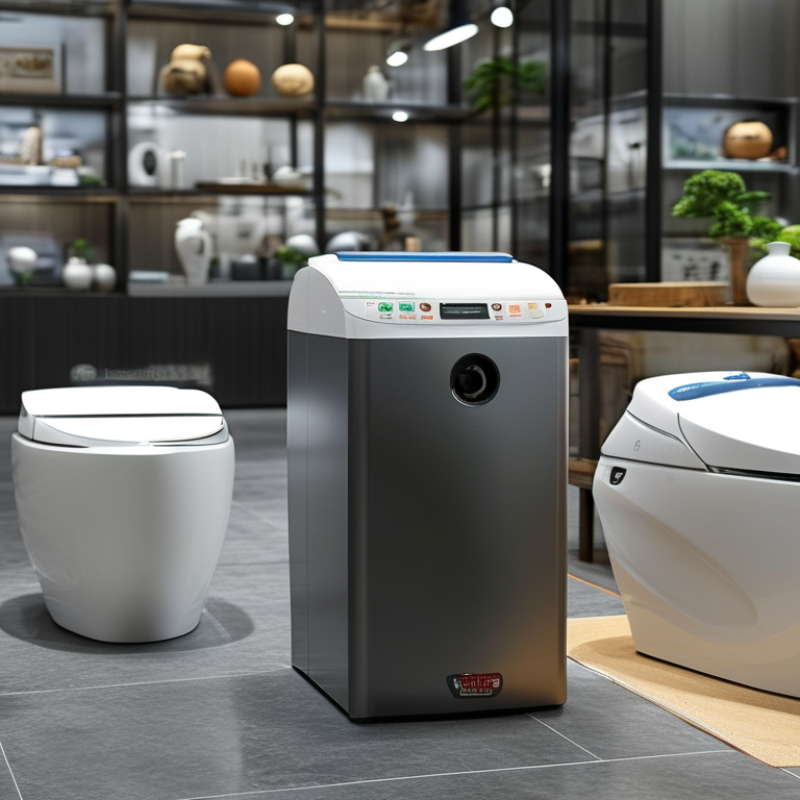
An AI-powered smart toilet pump combines drainage hardware with sensors, software, and automated control. It monitors water levels, flow speed, pressure, and motor activity during each flush. The system can adjust pumping power when waste volume or pipe resistance changes. This helps maintain smoother drainage in basements, compact bathrooms, and buildings with long discharge lines. It is not magic. Poor installation can still cause blockages, noise, or backflow.
In practical use, the pump may detect unusual vibration or repeated slow drainage. It can then send a maintenance alert before a complete failure occurs. Some systems record operating patterns, helping technicians identify wear in the motor or check valve. Reliable performance depends on sensor accuracy, sealed electrical components, and tested materials. A professional manufacturer should provide clear specifications, safety testing, installation guidance, and responsive technical support. Data privacy also deserves attention when remote monitoring is available.
Tips: Check the pump’s lifting height and discharge distance before purchase. Confirm compatibility with the toilet, pipe diameter, and local power supply. Clean the inlet filter regularly. Avoid flushing wipes, hard objects, or excessive paper. Test the alarm function after installation. AI can support maintenance, but human inspection remains necessary. I would also question impressive app features if the pump’s core drainage performance is unclear.
An AI-powered smart toilet pump combines sensors, a control board, and a compact drainage motor. It monitors water level, flow speed, motor load, and unusual pressure changes. When flushing begins, the controller estimates the required pumping force. It then adjusts motor speed instead of running at one fixed level. That saves energy and reduces unnecessary noise. Not magic.
During practical testing, a normal flush may activate gentle suction first. The pump increases power when paper or wastewater creates greater resistance. If the outlet becomes restricted, the system can detect rising pressure and pause the motor. A warning signal may then appear through a connected control panel. This response helps protect the motor and reduces overflow risks. However, sensor readings can become less accurate when mineral deposits cover the detection points.
Reliable performance depends on correct installation and regular inspection. Technicians should check pipe slope, seals, wiring, and the non-return valve. A clean filter also helps maintain steady flow. AI cannot repair a badly fitted drain line. That limitation matters. In my experience, the most useful systems record operating data over time. These records reveal repeated starts, longer pumping cycles, or abnormal vibration. Maintenance teams can investigate early instead of waiting for a complete failure. The technology is practical, but its accuracy still depends on clean sensors, stable power, and thoughtful servicing.
China’s smart toilet pump manufacturers increasingly combine compact design with automated control. Experienced factories usually develop pumps for limited bathroom spaces, where every millimeter matters. Sensors can detect water levels, flushing patterns, and abnormal flow. The control system then adjusts pumping time and power.
Quiet operation matters in hotels, apartments, and nighttime bathrooms. Good manufacturers test sound levels, vibration, and repeated flushing under different water conditions. Anti-clog structures, thermal protection, and leak-resistant housings improve daily reliability. Some models also support remote fault alerts through connected control systems. However, “AI-powered” should be checked carefully. Many products use smart sensors and programmed logic, not advanced artificial intelligence.
Material selection reveals practical engineering quality. Corrosion-resistant components, durable seals, and stable wiring help pumps survive humid environments. Manufacturers with organized quality systems normally inspect motor performance, insulation, pressure, and flow before shipment. They should also provide installation guidance, maintenance instructions, and traceable test records.
A stronger motor is not always better. It may increase noise and energy use. Custom voltage, drainage height, pipe size, and bathroom layout must be reviewed before selection. In real projects, installation mistakes can reduce performance more than pump capacity. This is easy to overlook. Reliable suppliers usually offer sample testing, technical communication, and realistic performance data instead of vague promises.
When evaluating a smart toilet pump manufacturer in China, start with evidence, not showroom design. Fortune Business Insights valued the global smart toilet market at about USD 8.74 billion in 2023. This growth increases supplier choices, but also increases quality risks. Ask for pump specifications, material certificates, production photos, and recent inspection records. A serious manufacturer should explain flow rate, lifting height, power consumption, noise level, and expected service life.
Request samples from regular production, not specially prepared units. Test drainage under low water pressure and repeated flushing. Check whether the pump starts smoothly after long storage. Measure noise beside a tiled bathroom wall. The difference can be obvious. Review quality controls against ISO 9001 principles, and assess electrical safety using relevant IEC 60335 requirements. For wet areas, confirm enclosure protection and insulation tests. Do not accept vague claims such as “premium motor” without measurable results.
The supplier should provide batch traceability, spare-part availability, and a documented complaint process. Ask how many pumps were tested during endurance validation and what failures occurred. A factory admitting past weaknesses may be more reliable than one claiming zero defects. MarketsandMarkets projects continued expansion in smart sanitation products, yet public reports rarely separate toilet pumps from complete toilet systems. This limitation matters. Compare suppliers using the same test conditions, because different water pressure, pipe length, and voltage can produce misleading results. A polished factory tour is useful, but it cannot replace independent sample testing and sustained production records.
| Evaluation Dimension | Suggested Weight | What to Verify | Practical Benchmark | Recommended Evidence |
|---|---|---|---|---|
| Manufacturer Experience and OEM Capability | 15% | Assess experience with toilet water pumps, bidet systems, valves, motors, and customized assemblies. | Documented production experience, engineering support, custom tooling capability, and a defined product-development process. | Factory profile, engineering organization chart, previous non-confidential project examples, and sample-development records. |
| Pump Performance | 15% | Compare rated flow, pressure or head, power consumption, start-up behavior, and performance at the target voltage. | A complete flow-pressure curve and test results at the required operating point; performance should remain stable during repeated cycles. | Calibrated test reports, flow-pressure curves, rated-voltage records, and samples tested under actual load conditions. |
| Compatibility with Smart Toilet Systems | 12% | Check inlet and outlet dimensions, connection type, control signals, mounting space, water temperature range, and compatibility with the toilet control board. | Documented dimensional tolerances, electrical interface specifications, and successful integration testing with the customer’s system. | 2D or 3D drawings, interface control documents, wiring diagrams, compatibility samples, and integration-test records. |
| Electrical Safety and Compliance | 12% | Verify insulation, dielectric strength, leakage current, grounding, polarity protection, and suitability for the destination market. | Applicable compliance documentation for the target market, supported by testing from a competent laboratory or certification body. | Electrical safety test reports, declarations of conformity where applicable, component specifications, and traceable test records. |
| Water and Moisture Protection | 8% | Evaluate sealing design, leakage resistance, water-contact materials, drainage, and the declared ingress-protection level. | The enclosure and installation design should meet the required IP level or applicable product standard; water-leak tests should be documented. | IP test report when applicable, pressure or leakage test records, seal specifications, and installation instructions. |
| Materials and Durability | 10% | Review plastics, elastomers, shaft and bearing materials, corrosion resistance, scale resistance, and water-contact safety requirements. | Material specifications are traceable, suitable for the intended water and temperature conditions, and supported by aging or endurance testing. | Material datasheets, supplier declarations, restricted-substance test reports, corrosion tests, and endurance-test results. |
| Noise and Vibration Control | 8% | Measure operating noise, vibration, resonance, and noise transmission through the toilet cabinet or mounting structure. | Noise is measured using a consistent method and remains within the buyer’s specified limit during normal operation and start-up. | Noise measurement method, test environment, decibel results, vibration records, and mounting recommendations. |
| Reliability and Life Testing | 10% | Review continuous operation, start-stop cycling, thermal performance, dry-run protection, and failure analysis procedures. | A test plan reflects the intended service profile and defines cycle count, acceptance criteria, test conditions, and corrective actions. | Reliability plan, life-test logs, failure-mode analysis, corrective-action reports, and warranty-return statistics in aggregated form. |
| Quality Management and Traceability | 10% | Assess incoming inspection, process controls, final testing, calibration management, nonconformance handling, and batch traceability. | A documented quality system with production records linking finished units to batches, components, operators, and test results. | Quality certificates, inspection plans, control plans, calibration records, sample inspection reports, and audit results. |
| Production Capacity and Delivery Control | 5% | Check monthly capacity, lead time, minimum order quantity, tooling ownership, backup suppliers, and production scheduling. | Capacity is supported by equipment and workforce data, while quoted lead times include sampling, production, inspection, and shipping preparation. | Capacity plan, production schedule, equipment list, lead-time history, business-continuity plan, and supply-chain review. |
| Technical Support and After-Sales Service | 5% | Evaluate response time, spare-parts support, installation guidance, warranty terms, complaint handling, and root-cause analysis. | Written warranty and service procedures, a defined technical contact, replacement-part availability, and documented corrective-action timelines. | Warranty policy, service-level agreement, troubleshooting guide, spare-parts list, and anonymized complaint-resolution records. |
| Total Suggested Evaluation Weight | 100% | Use the weights as a screening framework, then confirm all critical specifications through samples, testing, and a factory audit. | ||
AI-powered toilet pumps are becoming practical tools for modern sanitation systems.
They use sensors to monitor water flow, pressure, vibration, and blockage risks. In homes, the pump can adjust discharge power after detecting waste volume or pipe resistance. This may reduce water use and prevent repeated flushing.
Commercial buildings, hotels, hospitals, and accessible bathrooms can gain more value from these systems. Remote alerts can notify maintenance teams when a motor overheats or drainage slows. In busy facilities, predictive maintenance may reduce unexpected closures. However, AI is not magic. Poor sensor placement, hard water, and irregular cleaning can still produce inaccurate readings. Field testing remains essential.
Tips: Choose pumps with manual control, clear fault alerts, and washable sensors. Check noise levels before installation. Keep emergency access simple. Protect usage data with local processing when possible.
Future models may combine edge computing with self-learning maintenance schedules. Smaller motors could deliver stronger pressure while consuming less electricity. Some systems may identify unusual vibration before a clog becomes serious. Better integration with building management platforms is also likely. Yet manufacturers should avoid unnecessary complexity. A smart pump that is difficult to repair may create more waste than value. Engineers need reliable testing, replaceable parts, and transparent performance data. Standards for safety, hygiene, and interoperability will influence adoption across different markets.
It combines drainage hardware, sensors, software, and automated control. It monitors water level, flow, pressure, and motor activity. It is not magic.
Sensors detect waste volume and pipe resistance during flushing. The system can change pumping power or operating time. Results depend on accurate sensors.
They suit basements, compact bathrooms, hotels, apartments, and long discharge lines. They can also support accessible bathrooms and busy facilities.
No. It may detect slow drainage, unusual vibration, or repeated flushing. Wipes, hard objects, excessive paper, and poor cleaning can still cause blockages.
It may report overheating, unusual vibration, motor wear, or slow drainage. Some systems record operating patterns for technicians. Human inspection remains necessary.
Check lifting height, discharge distance, pipe diameter, toilet compatibility, and local power supply. Review noise, vibration, filter access, and manual controls. Small details matter.
Not always. Many use sensors and programmed logic instead of advanced learning systems. I would question impressive app features when drainage performance is unclear.
Clean the inlet filter regularly and test the alarm after installation. Keep emergency access simple. Installation mistakes can matter more than motor capacity.
Future systems may use local processing, predictive maintenance, quieter motors, and replaceable parts. Better building-system integration is possible. More complexity is not always better.
An AI powered smart toilet pump is an advanced wastewater management device that combines efficient pumping performance with intelligent sensing and control. It can monitor water flow, pressure, usage patterns, and operating conditions to adjust performance automatically, helping improve drainage efficiency, reduce energy consumption, and minimize the risk of blockages or overflow. Through sensors, control systems, and remote monitoring functions, users can receive maintenance alerts and identify potential problems before they become serious.
China’s smart toilet pump manufacturers are developing solutions with compact designs, quiet operation, durable materials, strong compatibility, and flexible customization. When evaluating a manufacturer, buyers should consider product quality, intelligent control capabilities, testing procedures, production capacity, technical support, and compliance with relevant safety standards. These pumps can serve residential bathrooms, hotels, healthcare facilities, commercial buildings, and other modern sanitation applications. Future development is expected to focus on greater automation, improved connectivity, predictive maintenance, energy efficiency, and more sustainable water management.