China Top Autonomous Self Driving Smart Toilet Grinder? This emerging product category combines toilet waste grinding, sensor control, and limited autonomous movement. It deserves careful evaluation, not exaggerated claims.
The WHO and UNICEF Joint Monitoring Programme reported in 2023 that 3.5 billion people lacked safely managed sanitation. This figure shows why reliable sanitation equipment matters. However, global reports rarely separate toilet grinders from broader sanitation technologies. Market estimates therefore require caution. Grand View Research identifies smart toilets as a growing technology market, but its data does not prove demand for autonomous grinder systems.
Bruce Gordon, a World Health Organization sanitation specialist, has stated, “Sanitation is a human right.” His principle gives this discussion a useful foundation. An Autonomous self-driving smart toilet grinder should support hygiene, accessibility, and safer waste handling. It should not replace certified plumbing design or responsible maintenance.
Imagine a compact unit moving across a clean facility floor. Its sensors detect obstacles. A sealed grinder processes waste through controlled rotation. The system then reports blockage risks through a mobile dashboard. Small details matter. Noise, battery life, waterproofing, emergency stops, and cleaning access can determine real-world performance.
China has strong manufacturing capacity in motors, sensors, pumps, and smart controls. Yet “top” cannot mean the cheapest or most automated model. Independent testing, documented specifications, and after-sales service remain essential. Some product claims still appear vague. That weakness deserves attention.
This guide examines leading Chinese suppliers, technical designs, safety features, operating limits, and practical purchasing questions. The goal is informed comparison, not promotional certainty.
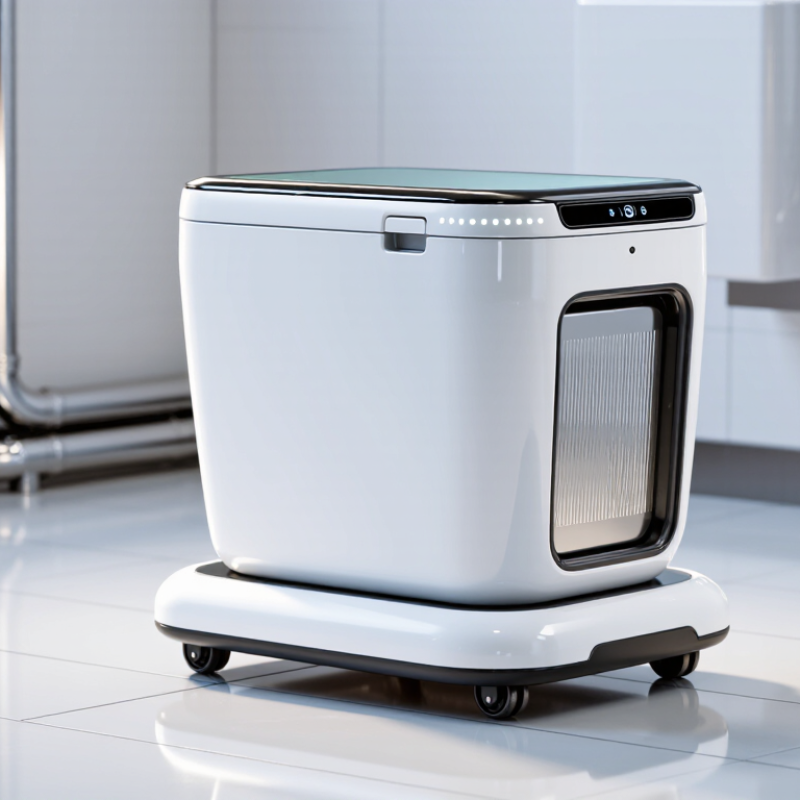
China’s autonomous smart toilet grinders combine waste grinding, pumping, sensing, and control in one compact system. The phrase “self-driving” usually describes automatic operation, not vehicle technology. These units detect flushing, adjust grinding cycles, and move wastewater through narrow discharge pipes.
Their scope covers residential bathrooms, renovated apartments, hotels, offices, and locations below the main drainage level. A typical unit may include a macerating chamber, level sensor, motor, non-return valve, and alarm system. In practice, installation quality matters as much as the machine. Uneven flooring, poor ventilation, or an unsuitable pipe route can reduce reliability. Technicians should check flow distance, lifting height, access for maintenance, and electrical protection before installation. China’s varied building layouts make one universal specification unrealistic.
Tips: Measure the discharge route carefully. Keep a clear service opening. Test automatic starting several times after installation. Do not flush hard objects, excess wipes, or materials outside the equipment’s design. Ask for noise data, overload protection details, cleaning guidance, and documented performance tests. These records support safer purchasing and more consistent maintenance.
The technology is promising, but “autonomous” can sound stronger than actual performance. Sensors may misread unusual loads, and alarms still need human attention. Field trials should examine noise at night, restart behavior after power loss, odor control, and long-term motor wear. A careful evaluation should value stable operation over attractive specifications.
Autonomous Functions in a Smart Toilet Grinder
A modern autonomous toilet grinder combines sanitation hardware with mobile control. Distance sensors scan walls, doorways, and floor edges during movement. Wheel encoders help the unit estimate its position indoors. This matters in bathrooms, service corridors, and temporary facilities. Navigation software can follow planned routes or return to a charging point. However, glossy tiles and standing water may confuse sensors. The system needs careful testing in real environments.
The grinder uses a sealed macerating chamber to reduce waste before discharge. A level sensor can identify unusual buildup or possible blockages. Self-cleaning cycles rinse internal surfaces after scheduled use. Some systems also flush the cutting chamber with measured water. This reduces residue, odor, and maintenance contact. It does not eliminate maintenance. Filters, seals, and blades still require inspection by trained personnel.
Remote control adds practical value for facility operators. A secure dashboard can show location, battery level, cleaning status, and fault alerts. Operators may pause movement or send the unit to a service area. Clear alerts are more useful than complicated screens. In practice, the response may not be perfect. A weak signal can delay commands, while a dirty sensor can produce false warnings. Reliable designs should record events locally and continue safe basic functions when connectivity fails.
| Autonomous Area | Function | Typical Specification or Capability | How It Works | Operational Value |
|---|---|---|---|---|
| Sensors | Occupancy Detection | Infrared, pressure, or seat-position sensing; automatic activation and safety lockout | Detects whether a user is seated before enabling flushing, washing, drying, or grinding functions | Core Function Helps prevent accidental activation and improves user safety |
| Sensors | Water-Level and Leakage Monitoring | Continuous monitoring of inlet water, tank level, pump status, and abnormal leakage conditions | Stops or limits operation when insufficient water, overflow, or leakage is detected | Protection Reduces the risk of flooding and pump damage |
| Sensors | Blockage and Motor-Load Detection | Motor-current or torque monitoring for the macerator and discharge pump | Detects abnormal resistance and may stop the grinder automatically to protect the motor | Important Supports safer operation in compact sewage-discharge systems |
| Self-Cleaning | Automatic Bowl Rinse | Pre-rinse and post-use rinsing using clean water through an internal spray channel | Runs a programmed rinse cycle after occupancy ends or after a flush command | Standard Improves hygiene and helps reduce residue buildup |
| Self-Cleaning | Nozzle Washing and Sterilization | Self-rinsing bidet nozzle with adjustable water temperature and position; optional UV or electrolyzed-water treatment | Cleans the nozzle before and after use, with optional disinfection depending on configuration | Hygiene Reduces cross-contamination between users |
| Self-Cleaning | Grinder and Discharge-Cycle Cleaning | Timed clean-water flushing of the grinder chamber, pump, and discharge pipe | Uses water flow to clear remaining waste after grinding and pumping | Maintenance Helps limit odors and internal deposits |
| Grinding System | Waste Maceration | Electric cutting or grinding mechanism designed to reduce toilet waste into a pumpable slurry | Grinds waste before it enters a narrow discharge line; performance depends on pipe layout and installation | Application Useful where a conventional gravity drain is difficult to install |
| Grinding System | Automatic Flush and Pump-Out | Electronic flush control combined with an integrated discharge pump | Flushes, macerates, and pumps waste after the user leaves or a cycle is initiated | Autonomous Reduces the need for manual waste handling |
| Navigation | Self-Driving Service Movement | Optional mobile platform with wheel motors, obstacle sensors, and a rechargeable battery | Uses programmed routes or remote commands to move the unit between designated locations | Optional Relevant mainly to mobile sanitation or service units, not fixed bathroom installations |
| Navigation | Obstacle and Edge Detection | Ultrasonic, infrared, bumper, or cliff sensors for low-speed indoor movement | Slows, stops, or changes direction when an obstacle, step, wall, or restricted area is detected | Safety Helps prevent collisions and falls during autonomous movement |
| Navigation | Docking and Automatic Charging | Charging dock with low-battery return function; water and drainage connections may require a fixed service point | Returns to a known dock or charging area when battery capacity reaches a preset threshold | Convenience Supports repeated operation with less manual intervention |
| Remote Control | Mobile Application or Wireless Control | Remote start, flush, cleaning-cycle selection, temperature adjustment, and status notifications | Receives commands through a local wireless connection or network-enabled controller | Convenience Allows configuration without touching the control panel |
| Remote Control | Fault Alerts and Maintenance Reminders | Notifications for blockages, low water, leakage, filter replacement, abnormal motor load, or low battery | Reports operating conditions through indicator lights, audible alarms, or a connected application | Monitoring Can shorten response time when service is required |
| User Comfort | Heated Seat, Water, and Air Drying | Adjustable seat temperature, wash-water temperature, spray pressure, nozzle position, and warm-air drying | Stores user-selected settings and activates them after occupancy is detected | Comfort Provides a more controlled and accessible user experience |
| Safety | Child Lock and Emergency Stop | Control lock, lid or seat safety detection, overload protection, and manual stop switch | Disables selected functions when unsafe conditions or unauthorized operation are detected | Required Important for residential, public, and assisted-use environments |
| Installation | Plumbing and Electrical Requirements | Dedicated electrical supply, clean-water inlet, ventilation where needed, and correctly sized discharge piping | The grinding and pumping system operates only when installation, drainage slope, and pipe routing meet design requirements | Critical Professional installation is recommended for reliable performance |
A smart toilet grinder is not truly “self-driving”; it means automated flushing, grinding, and wastewater pumping. Its core performance depends on the cutting system, motor, pump, and stable 220–240 V power. Stainless cutting blades should reduce paper and organic waste into a manageable flow. However, blade clearance matters. Poor clearance can increase noise and blockage risks.
The motor must provide reliable starting torque, especially when the chamber contains thick waste. A sealed design helps protect electrical parts from moisture. The pump then moves wastewater through the discharge pipe, where pipe length, lift height, and bends affect performance. In practical installations, I would check these limits before judging capacity. Marketing figures can look impressive. Real bathrooms are less predictable. Sensors may also misread heavy foam or unusual loads, so manual inspection remains useful.
Tips: Use a dedicated 220–240 V circuit with proper grounding and residual-current protection. Ask a qualified electrician to verify local requirements. Keep the discharge route short, supported, and free from sharp bends. Test the grinder with clean water before regular use. Listen for grinding changes. A rising hum may indicate blade wear, motor strain, or a developing blockage. Schedule periodic cleaning, because even a well-designed system cannot compensate for neglected maintenance.
A smart toilet grinder should be judged by measurable performance, not polished specifications. Flow rate shows how quickly waste leaves the fixture. For compact residential installations, a practical target is 35–60 litres per minute, depending on pipe length and discharge conditions. Lifting head matters more than headline flow. A usable range of 5–9 metres supports many basement or remote-bathroom layouts, but every extra bend reduces available capacity.
Solids handling is often overlooked. EN 12050-3 addresses small wastewater lifting units and emphasizes reliable transport through narrow discharge lines. In field-oriented designs, a cutting system handling solids around 20–25 millimetres can reduce blockage risk. That is not a guarantee. Wet wipes, excessive paper, and foreign objects remain common failure causes. The numbers are not magic.
Noise should be reported in dB(A), measured under a defined method, preferably referencing ISO 3744 principles. A measured level near 45–55 dB(A) is generally more acceptable in a residential bathroom than readings above 60 dB(A). ASHRAE Handbook guidance on indoor acoustic comfort supports evaluating background noise, room surfaces, and operating cycles together. A tiled bathroom can make the same motor sound noticeably harsher. Installation is part of performance. Flexible connectors, solid mounting, and a short discharge route may improve perceived noise more than a minor motor upgrade. This is where many product comparisons become incomplete.
Performance Metrics: Flow Rate, Lifting Head, Solids Size, and dB(A) Noise
The chart compares representative non-branded residential and light-commercial grinder toilet performance levels. The displayed index uses practical reference points of 100 L/min flow, 10 m lifting head, 25 mm solids handling, and 50 dB(A) noise. Lower noise values indicate quieter operation; actual performance varies with pipe diameter, installation layout, wastewater temperature, and duty cycle.
A smart toilet grinder needs more than a compact motor and automatic controls. In practice, installers should verify the waste category before selecting equipment. EN 12050-3 applies to lifting plants for limited applications involving faecal-free wastewater. It may not cover every toilet grinder handling blackwater. That distinction matters. Ask for test evidence, intended-use limits, and installation instructions.
A smart system still depends on correct engineering and installation.
GB 50015-2019 provides important guidance for building drainage design in China. It supports decisions about pipe sizing, ventilation, discharge routing, and maintenance access. A reliable system should prevent backflow and allow safe cleaning. Sensors can detect water levels and motor faults. They cannot replace correct pipe gradients or professional installation. “Smart” is not a substitute for engineering.
IP protection ratings also deserve close attention.
The rating should match exposure to splashing, condensation, dust, and cleaning water. A higher number is not automatically better for every installation. Check the complete assembly, including cable entries and control boxes. From field experience, weak seals often appear after repeated servicing. This is easy to overlook. Documentation may sound convincing, yet actual site conditions can be harsher. Independent inspection and routine testing remain sensible, especially in bathrooms with limited ventilation.
It usually means automatic flushing, grinding, sensing, and pumping. It does not mean vehicle-style self-driving. Human attention remains necessary.
They suit homes, renovated apartments, hotels, offices, and bathrooms below main drainage levels. Technicians should check lifting height, pipe distance, floor conditions, and maintenance access. One specification cannot fit every building.
Cutting blades reduce waste into smaller particles inside a sealed chamber. A motor drives the cutting system, while a pump moves wastewater through narrow pipes. Thick loads can increase starting strain.
Many systems use a stable 220–240 V supply. A qualified electrician should verify grounding and residual-current protection. Avoid improvised wiring.
Not always. Distance sensors and wheel encoders may guide movement indoors. Glossy tiles, standing water, weak signals, or dirty sensors can cause errors. Real-site testing matters more than attractive specifications.
No. Scheduled rinsing can reduce residue, odor, and cleaning contact. Filters, seals, blades, and sensors still need inspection. A clean-looking chamber may hide wear.
A secure dashboard may display location, battery level, cleaning status, and fault alerts. Operators can pause movement or send the unit for service. Local records are important when connectivity fails.
Flush only materials within the equipment’s design. Do not flush hard objects or excessive wipes. Keep discharge pipes short, supported, and free from sharp bends. Test with clean water first.
A rising hum may indicate blade wear, motor strain, or a partial blockage. Repeated alarms may reflect unusual loads or dirty sensors. Power-loss restart behavior also deserves testing. One successful test proves very little.
An Autonomous self-driving smart toilet grinder is an advanced wastewater solution designed to process toilet discharge with minimal user intervention. This article defines its application scope and explains how integrated sensors can detect usage, activate grinding and pumping, monitor operating conditions, and support self-cleaning cycles. Remote control features may also allow users to check status, receive maintenance alerts, or adjust operating settings. Navigation in this context refers to intelligent system control and guided wastewater handling rather than physical movement.
The article also examines the core technology, including cutting systems, motors, pumps, and 220–240 V electrical operation. Key performance indicators include flow rate, lifting head, maximum solids size, and operating noise measured in dB(A). Finally, it discusses safety and installation considerations, including EN 12050-3, GB 50015-2019, and suitable IP protection ratings. Together, these factors help users evaluate reliability, hygiene, energy use, noise control, and compliance for residential or commercial applications.