China Best Smart Bathroom Waste Management AI Supplier introduces a practical shift in restroom hygiene and waste control. Traditional bins depend on fixed schedules and visual checks. That approach often misses sudden waste increases, unpleasant odors, or overflowing liners during busy hours.
Smart bathroom waste management AI combines fill-level sensors, weight detection, odor monitoring, and operational dashboards. A sensor beneath a washroom bin can report rising waste levels before the lid becomes difficult to close. At 7:30 a.m., facility teams may receive a clear alert instead of discovering the problem later. This experience matters in airports, hotels, hospitals, offices, and shopping centers.
Dr. Fei-Fei Li, a leading human-centered AI researcher, said, “AI is not a substitute for human intelligence; it is a tool to amplify human creativity and ingenuity.” Her view reflects the responsible role of this technology. AI should support cleaning teams, not replace their judgment. Reliable suppliers must explain sensor accuracy, maintenance needs, data protection, and system integration clearly. They should also provide testing evidence and responsive technical service.
The technology is not perfect. Sensors can misread wet paper, unusual objects, or temporary movement. That weakness deserves attention. A trustworthy China supplier should offer calibration, alert verification, and practical training. The strongest solutions connect intelligent monitoring with cleaner workflows, lower unnecessary collection trips, and more consistent user experiences. Performance should be measured in real bathrooms, not only in product demonstrations.
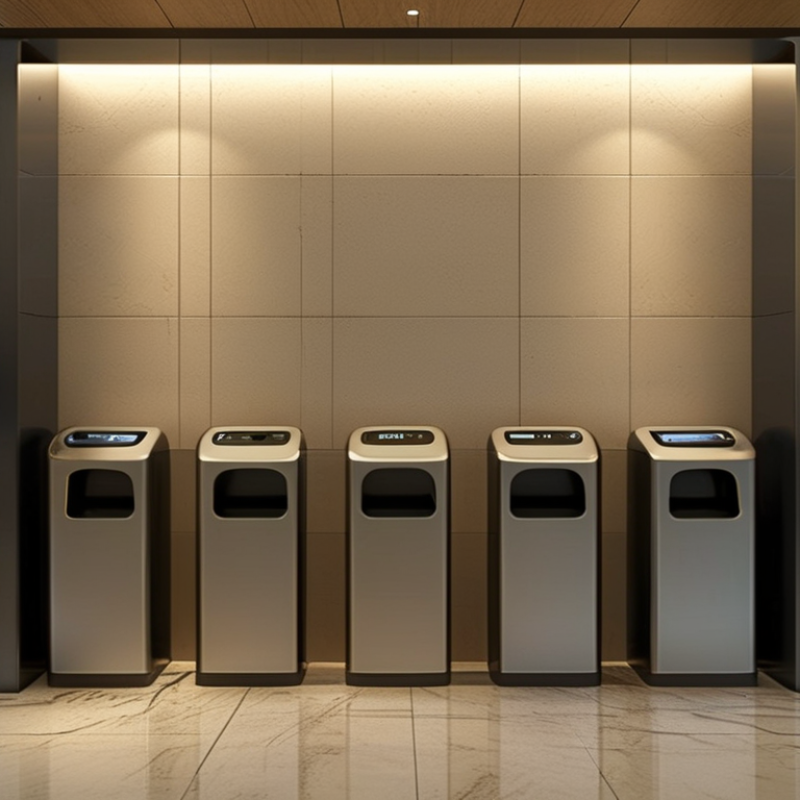
AI-enabled smart bathroom waste management is a system that uses sensors, software, and connected equipment to monitor waste conditions. It can identify bin fullness, unusual disposal patterns, odors, and collection needs. Some systems use cameras, but privacy-safe sensors are often more suitable for public facilities.
A typical installation measures weight, motion, temperature, and filling levels. The platform then sends alerts to cleaning teams through a dashboard or mobile device. Staff can schedule collection by actual demand, rather than fixed routines. This may reduce overflow, unpleasant smells, and unnecessary service trips. In busy airports, offices, and hospitals, reliable data can improve hygiene decisions.
A model can misread wet paper, heavy packaging, or temporary crowd surges. Poor sensor placement creates poor results. Experienced suppliers should test equipment in real bathrooms, check data accuracy, and provide clear maintenance procedures. Secure data handling also matters, especially when visual tools are used. Buyers should request trial records, sensor calibration details, operating-temperature ranges, and service response terms. The most dependable solution is not always the most advanced one. It is the system that cleaning teams can understand, repair, and use consistently. Human inspection remains necessary, because real bathrooms are rarely as predictable as software assumes.
China Best Smart Bathroom Waste Management AI Supplier
Reliable smart bathroom waste management suppliers combine several core technologies rather than depending on AI alone. Fill-level sensors use ultrasonic waves or infrared signals to measure bin capacity. Load cells detect weight changes and reveal unusual disposal patterns. Small edge-computing units process this data locally, reducing delays and limiting unnecessary data transmission. Data must stay useful.
Computer vision can identify overflowing paper, misplaced items, or blocked disposal openings. Privacy requires careful design, so systems should avoid storing identifiable images whenever possible. IoT gateways connect bins, cleaning devices, and maintenance platforms through encrypted communication. Facility managers can then view fill levels, temperature, collection times, and fault alerts from one dashboard.
Predictive analytics helps estimate when a bin may require service. This can reduce unnecessary cleaning rounds and prevent unpleasant overflow near sinks or changing areas. However, AI is not flawless. Steam, water drops, poor lighting, and crushed waste can confuse sensors. Small errors matter. Experienced suppliers test equipment in busy, humid bathrooms, not only in controlled rooms. They should provide sensor calibration, audit logs, software updates, and clear failure alerts. A practical system must also allow manual inspection when predictions appear doubtful. Reliability comes from combining automation with accountable human judgment.
| Technology Area | Core Technology | Main Function in Waste Management | Common Sensors or Methods | Relevant Technical Data | Applicable Standards or Protocols |
|---|---|---|---|---|---|
| Waste-Level Monitoring | AI-assisted fill-level detection | Measures the remaining capacity of sanitary-waste containers and generates collection alerts before overflow occurs. | Ultrasonic sensors, time-of-flight sensors, load cells, and camera-based image analysis. | Typical reporting intervals range from 1 to 60 minutes; measurement accuracy depends on container geometry, waste type, and sensor placement. | IEC 60529 for enclosure protection; MQTT 3.1.1 or MQTT 5.0 for telemetry exchange. |
| Waste Classification | Computer vision and machine-learning classification | Identifies visible waste categories such as paper products, plastic packaging, metal items, and organic contamination. | RGB cameras, near-infrared imaging, image segmentation, and trained classification models. | Model performance is normally evaluated with precision, recall, F1 score, and a confusion matrix; results vary with lighting and occlusion. | ISO/IEC 2382 terminology for information technology and machine learning evaluation practices defined by the project specification. |
| Odor Control | VOC and hydrogen-sulfide monitoring with adaptive ventilation | Detects odor-related gases and adjusts extraction or filtration according to measured air conditions. | Electrochemical H2S sensors, metal-oxide VOC sensors, temperature and humidity sensors. | H2S sensors may be specified in parts per billion or parts per million; sensor drift and cross-sensitivity require calibration. | ISO 16000 series for indoor-air measurement principles; IEC 61010-1 for safety requirements of measurement equipment. |
| Leak Detection | Continuous water-leak and abnormal-flow analytics | Identifies burst pipes, leaking valves, continuously running fixtures, and abnormal drainage patterns. | Water-flow meters, pressure sensors, conductive leak strips, and acoustic sensors. | Flow monitoring commonly uses litres per minute or cubic metres per hour; alarm thresholds are configured according to fixture type and building use. | ISO 4064 for water meters; EN 1717 for protection against pollution of potable-water installations. |
| Greywater Management | Filtration, disinfection, and reuse control | Separates and treats wastewater from handwashing or showering for approved non-potable applications. | Turbidity, conductivity, pH, oxidation-reduction potential, flow, and tank-level sensors. | Treatment status is commonly monitored through turbidity, pH, conductivity, disinfectant residual, and storage volume. | ISO 24513 for water and wastewater service-management principles; local water-reuse regulations must also be followed. |
| Wastewater Quality | Online water-quality sensing and anomaly detection | Detects sudden changes that may indicate contamination, treatment failure, or abnormal discharge. | pH probes, turbidity meters, conductivity cells, temperature sensors, and total-solids estimation. | pH is measured on a 0–14 scale; conductivity is commonly reported in µS/cm or mS/cm; turbidity is reported in NTU. | ISO 10523 for pH determination; ISO 7027 for turbidity measurement; ISO 7888 for electrical conductivity. |
| Predictive Maintenance | Edge analytics and failure prediction | Predicts filter replacement, pump wear, fan failure, battery depletion, and abnormal motor behavior. | Vibration, current, temperature, runtime, pressure, and historical maintenance data. | Typical outputs include remaining useful life estimates, fault codes, operating hours, and maintenance priority levels. | ISO 13374 for condition-monitoring data processing; ISO 17359 for condition-monitoring program guidance. |
| Connectivity | IoT gateway and secure cloud integration | Transfers sensor data to dashboards, work-order systems, building-management platforms, and mobile alerts. | Ethernet, Wi-Fi, cellular communication, Bluetooth Low Energy, and low-power wide-area networks. | Important parameters include message latency, battery life, network coverage, packet-loss rate, and offline data buffering. | MQTT, HTTPS, TLS 1.2 or later, IPv4/IPv6, and RESTful API integration. |
| Data Security | Device identity, access control, and encrypted data storage | Protects operational data, user permissions, maintenance records, and connected equipment from unauthorized access. | Unique device credentials, certificate-based authentication, role-based access, audit logs, and secure firmware updates. | Security evaluation commonly covers authentication, authorization, encryption, logging, vulnerability handling, and update management. | IEC 62443 principles for industrial cybersecurity; ISO/IEC 27001 information-security management practices. |
| Energy Management | AI-based load scheduling and low-power operation | Reduces energy use by coordinating pumps, fans, ultraviolet systems, displays, and standby functions. | Power meters, occupancy sensors, thermal sensors, and operating-schedule analytics. | Energy performance is measured in kWh, peak demand, operating hours, and energy consumed per visitor or per treated volume. | IEC 60335-1 for safety of household and similar electrical appliances; ISO 50001 for energy-management systems. |
| Operational Dashboard | Real-time visualization and automated work orders | Combines fill levels, odor alerts, leaks, water quality, equipment status, and service history in one interface. | Web dashboards, mobile notifications, geographic maps, threshold rules, and maintenance-ticket APIs. | Key performance indicators include response time, overflow incidents, leak duration, collection frequency, water consumption, and equipment uptime. | OpenAPI-based integration, HTTPS, role-based access control, and documented data-retention policies. |
Note: Technical performance varies according to installation conditions, sensor calibration, waste composition, building layout, local regulations, and the selected control architecture.
China’s smart bathroom waste management solutions combine sensors, AI analytics, and durable sanitation hardware. Smart bins measure fill levels without requiring staff to open lids. Infrared sensors detect usage, while weight sensors estimate remaining capacity more accurately. Some systems identify tissue buildup, unusual odors, or overflowing liners. Small details matter.
A cloud dashboard can show waste status by restroom, floor, or facility. Cleaning teams receive alerts before bins become unpleasant or hazardous. This supports scheduled collection and reduces unnecessary service visits. Waterproof control panels and sealed sensor housings help equipment withstand steam, splashes, and frequent cleaning. Modular designs also simplify maintenance and replacement.
AI is useful, but it is not flawless. Wet tissues may confuse classification sensors, and crowded bathrooms can produce irregular data. Regular calibration remains necessary. Reliable suppliers should provide testing records, clear installation guidance, and responsive technical support. They should also protect operational data and limit access to authorized personnel. In practice, the best solution is not the most complex one. It is the system that staff can understand, clean, repair, and trust every day.
China Best Smart Bathroom Waste Management AI Supplier
How to Evaluate a Smart Bathroom Waste Management AI Supplier
A reliable supplier should show practical experience in busy bathrooms, not only impressive demonstrations. Ask for evidence from offices, hospitals, hotels, or transport facilities with similar traffic levels. The system should identify overflowing bins, unusual disposal patterns, and collection needs with clear accuracy records. Request test results, maintenance logs, and explanations of false alarms. Small details matter. A sensor that fails near steam or poor lighting can disrupt daily cleaning.
Evaluate the AI platform’s technical design and data protection practices. It should process useful information without collecting unnecessary personal data. Ask how images are handled, where data is stored, and who can access reports. The supplier should explain integration with existing cleaning schedules and facility software. Good support includes installation guidance, staff training, replacement procedures, and response times. Certifications and documented security controls can strengthen confidence, but they should be verified independently.
Cost comparisons should include batteries, connectivity, software updates, and sensor calibration. A low purchase price may hide repeated service costs. Request a limited pilot with measurable targets, such as fewer overflow incidents and shorter collection routes. No pilot is perfect. We once underestimated cleaning staff preferences when assessing a similar workflow. Their feedback changed the dashboard design and improved adoption. A dependable supplier welcomes such criticism and adjusts its system instead of promising unrealistic results.
This weighted framework focuses on the main procurement factors for AI-enabled bathroom waste management systems. Technical performance, data security, integration capability, lifecycle cost, service support, and sustainability together provide a balanced basis for supplier evaluation. The percentages represent evaluation weights and are not company-specific performance scores.
Intelligent bathroom waste systems are moving from simple bins toward connected sanitation networks. Sensors can measure fill levels, odor, humidity, and usage frequency. AI then predicts collection needs before overflow occurs. This matters in hospitals, airports, schools, and high-density commercial buildings. A cleaning team can receive a practical alert, such as:
“Bin 80% full, west-floor restroom.”
That detail reduces unnecessary rounds and improves response time.
The WHO and UNICEF Joint Monitoring Programme reported in 2023 that 3.5 billion people lacked safely managed sanitation services. This gap shows why intelligent systems must support hygiene, not only convenience. UN-Water has also reported that over 80% of global wastewater is discharged without adequate treatment.
Smart toilets can monitor abnormal flushing, leakage, and maintenance patterns. Data dashboards may help facility managers reduce water loss and identify repeated sanitation failures. However, AI is not magic. A sensor can still fail in steam, foam, or heavy cleaning conditions.
Future systems will likely combine edge computing, touchless controls, robotic cleaning support, and lower-power sensors. Interoperability will become more important than attractive screens. The Global E-waste Monitor 2024 recorded 62 million tonnes of electronic waste in 2022, while only 22.3% was formally recycled.
Bathroom technology should therefore use replaceable modules and longer service lives. Privacy also needs careful design, especially where occupancy data is collected. Some predictions will be wrong. Human inspection remains necessary.
They measure bin fill levels, usage frequency, and estimated remaining capacity. Weight sensors improve accuracy. Small details matter.
Infrared sensors detect usage. Other sensors may identify tissue buildup, unusual odors, or overflowing liners.
A cloud dashboard displays waste status by restroom, floor, or facility. Alerts can arrive before bins become unpleasant.
Yes, status alerts support scheduled collection and shorter service routes. However, irregular data can still create extra visits.
Waterproof panels and sealed sensor housings improve durability. Equipment still needs proper cleaning and regular inspection.
No. Wet tissues may confuse classification sensors. Crowded spaces can also produce irregular readings. It is not perfect.
Request records from busy offices, hospitals, hotels, or transport facilities. Ask for test results, maintenance logs, and false-alarm explanations.
Ask whether images are collected, where data is stored, and who can access reports. Unnecessary personal data should be avoided.
Include batteries, connectivity, software updates, calibration, installation, and support. A low purchase price may hide repeated service costs.
A pilot can measure overflow reductions, collection times, and staff adoption. No pilot is perfect. Staff feedback may change the dashboard design.
Smart bathroom waste management AI combines artificial intelligence, connected sensors, and automated sanitation equipment to improve how bathroom waste is identified, collected, and processed. These systems can monitor waste levels, detect unusual conditions, optimize cleaning schedules, and provide real-time operational data. Core technologies may include IoT sensors, machine learning, image recognition, cloud platforms, data analytics, and intelligent control systems. Together, they help reduce unnecessary servicing, improve hygiene, lower operating costs, and support more efficient resource management.
China’s smart bathroom waste management solutions are increasingly designed for public facilities, commercial buildings, transportation hubs, healthcare environments, and large residential developments. When evaluating a supplier, buyers should consider system accuracy, hardware durability, software compatibility, data security, customization capabilities, technical support, and long-term maintenance. Future trends are expected to include stronger predictive analytics, improved energy efficiency, touch-free operation, centralized management, and deeper integration with smart building platforms. These developments will make intelligent bathroom waste systems more responsive, sustainable, and easier to manage.