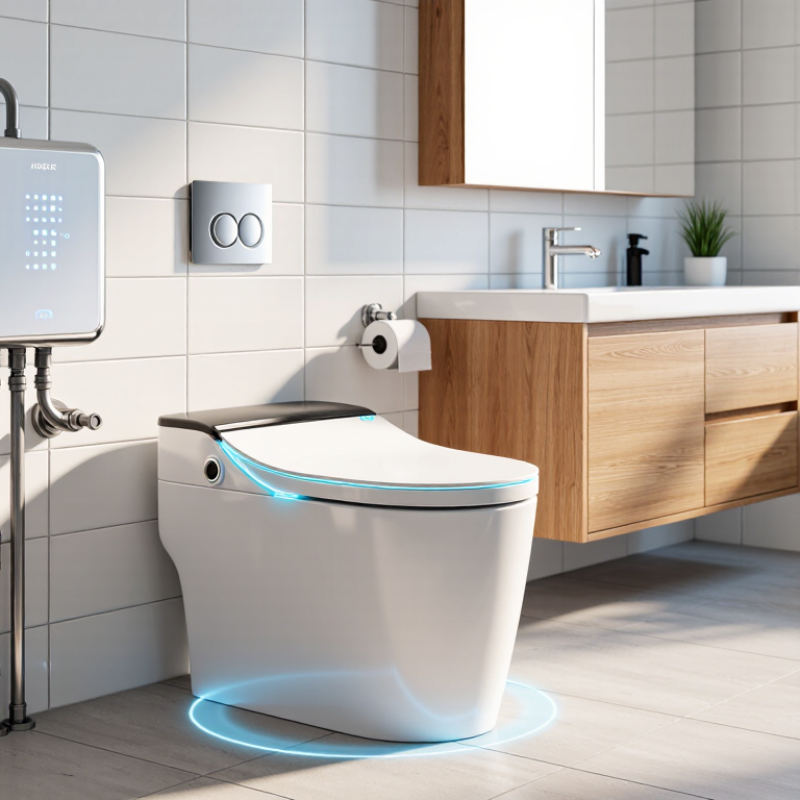
How to Choose an AI Health Tracking Smart Toilet Pump?

Time:2026-10-22 Author:Sienna
0%

Choosing an AI health tracking smart toilet pump requires more than comparing screens, sensors, and advertised features. A reliable choice must connect sanitation, plumbing performance, data quality, and user safety. The WHO/UNICEF Joint Monitoring Programme reported in 2023 that 3.5 billion people still lacked safely managed sanitation in 2022. This wider challenge gives smart sanitation practical importance, especially in homes, clinics, and assisted-living environments.

Look for a pump with verified flow capacity, backflow protection, quiet operation, and compatibility with existing pipe dimensions. A bathroom should not sound like a workshop. The system should also explain how it measures urine patterns, stool changes, weight, temperature, or hydration indicators. These signals can support personal awareness, but they are not automatic diagnoses. The U.S. FDA’s guidance on general wellness devices reinforces the need to distinguish wellness information from clinically validated medical claims. That difference matters.

Data governance deserves equal attention. NIST’s AI Risk Management Framework recommends managing validity, reliability, privacy, transparency, and security throughout an AI system’s lifecycle. Ask where measurements are stored, whether cloud transmission can be disabled, and how users can delete their records. Also check independent testing, warranty terms, replacement-pump availability, and installation requirements. Manufacturer claims may sound impressive.

A thoughtful buyer should test the complete experience: a stable flush, consistent sensor readings, easy cleaning, and clear alerts. Some systems will still produce false readings. That is normal, but it must be disclosed. The best AI health tracking smart toilet pump is not the one with the most features. It is the one that performs predictably, protects personal data, and communicates its limits honestly.

How to Choose an AI Health Tracking Smart Toilet Pump?

Understanding AI Health Tracking Smart Toilet Pump Functions

How to Choose an AI Health Tracking Smart Toilet Pump

An AI health tracking smart toilet pump should do more than move water. Its pump must deliver stable pressure, quiet operation, and reliable flushing after repeated use. Grand View Research estimated the global smart toilet market at about $8.5 billion in 2023. Health sensors are among the market’s key growth factors.

Understanding its functions matters more than its appearance. AI systems may analyze urine color, stool images, sitting time, weight, and flushing patterns. Some models can identify unusual changes and send alerts through a connected application. However, these readings are screening signals, not medical diagnoses. The WHO Global Strategy on Digital Health 2020–2025 stresses data security, interoperability, and responsible digital care. The WHO and UNICEF Joint Monitoring Programme reported that 3.5 billion people lacked safely managed sanitation in 2022. Hygiene still matters more than clever software. A dirty sensor can produce confident errors. I would not trust a colorful dashboard without calibration records, cleaning guidance, and clear data controls.

Tips: Check the pump’s flow rate, noise level, clog resistance, and backup operation. Ask whether health data stays encrypted during storage and transfer. Choose adjustable alerts, because normal bathroom patterns differ between users. Test the sensor area after cleaning. Small errors can become repeated errors. Also confirm professional maintenance support and replacement-part availability.

How to Choose an AI Health Tracking Smart Toilet Pump?

A practical selection framework for evaluating the functions that most affect daily health tracking, pump reliability, hygiene, and user comfort.

The percentage values are a neutral evaluation weighting rather than medical advice. Prioritize reliable sensing, automatic data processing, safe water handling, and easy maintenance when comparing models.

Identifying Personal Health Monitoring and Pumping Requirements

Choosing an AI health tracking smart toilet pump starts with personal monitoring needs. Decide which signals matter: urine frequency, stool patterns, weight changes, or hydration trends. These signals can support conversations with clinicians, but they cannot confirm disease. The World Health Organization reports that noncommunicable diseases caused 74% of global deaths in 2021. Early pattern recognition may help, especially for older adults and people managing chronic conditions. Still, algorithms can misread unusual diets, medications, or irregular routines.

Pumping requirements deserve equal attention. The WHO and UNICEF Joint Monitoring Programme estimated that 3.5 billion people lacked safely managed sanitation in 2022. Reliable waste removal is therefore a health and safety issue, not a luxury feature. Check the required vertical lift, discharge distance, pipe diameter, flow rate, and solids-handling capacity. Add backflow protection and a manual override. A quiet pump matters in nighttime care, although noise ratings are sometimes measured under ideal conditions. I would question any model that promises effortless installation.

Tips: Keep a seven-day baseline before enabling alerts. Ask whether data is encrypted and exportable. Confirm that clinical professionals reviewed the health indicators. Test the pump during a power interruption. AI is useful, but imperfect. Human review remains essential.

Comparing Sensors, Data Accuracy, and Health Tracking Features

How to Choose an AI Health Tracking Smart Toilet Pump?

An AI health tracking smart toilet pump should collect useful data without disrupting daily routines. Look for pressure, optical, temperature, and flow sensors. Each sensor measures a different signal. Pressure sensors can estimate weight or fluid movement. Optical sensors may examine color or surface changes. Temperature sensors can identify unusual readings, but room temperature may affect results. A reliable system should explain which sensor produces each measurement.

Data accuracy matters more than impressive dashboards. Choose a device that supports calibration, repeat testing, and clear error notices. Measurements should remain consistent after cleaning and frequent use. In real homes, users may sit differently, flush at different times, or use varying water levels. These details can change results. I would compare readings across several days, not trust one unusual result. Even advanced algorithms can misread data.

Tips: Check whether the system stores raw readings, timestamps, and confidence levels. Review privacy controls before connecting an account. Health alerts should encourage professional advice, not replace it. If a reading seems unusual, repeat the test and consider recent diet, medication, exercise, or dehydration. Some features may sound helpful but offer little practical value. Choose functions you will actually use. Reliable design is sometimes less exciting.

How to Choose an AI Health Tracking Smart Toilet Pump? - Comparing Sensors, Data Accuracy, and Health Tracking Features

Sensor or System Configuration Primary Health Signals Typical Practical Accuracy Useful Tracking Features Response Time Main Limitations Recommended Use
Load-cell seat and floor sensors Body weight, sitting duration, visit frequency, weight trends Approximately ±0.1–0.5 kg under stable positioning and regular calibration Daily weight trend, sudden weight-change alerts, routine detection, user identification support Immediate measurement; trend analysis requires several days of data Clothing, movement, uneven flooring, and partial sitting can reduce accuracy Long-term wellness monitoring and hydration-related trend screening
Flow meter and calibrated collection chamber Urine volume, flow rate, voiding duration, frequency Typically ±2–5% after calibration; accuracy depends on flow stability and splash control High-volume or low-volume events, nocturia patterns, frequency changes, output trends Real-time during collection; trend reports can be generated daily or weekly Foam, splashing, incomplete collection, cleaning water, and mixed-use events may distort readings Users who need objective urinary-volume and frequency tracking
Optical urine-analysis module Color, turbidity, selected chemical indicators, possible blood or protein screening Color and turbidity can be measured consistently; chemical screening varies by reagent, lighting, and sample handling Hydration-color trends, abnormal-pattern flags, test-strip image interpretation Seconds to several minutes, depending on the test method Not a diagnostic laboratory test; medication, diet, lighting, and contamination can affect results Early screening support when paired with confirmatory clinical testing
Camera with computer-vision AI Stool form, approximate color, surface features, urine color, event classification Performance is usually strongest for broad categories; real-world accuracy depends heavily on lighting, lens cleanliness, and training data Stool-form classification, constipation or diarrhea trend flags, unusual-event detection Near real time when image quality is adequate Privacy concerns, occlusion, poor lighting, water reflections, and limited reliability for medical diagnosis Hands-free bowel-habit tracking with strong privacy controls and local image processing
Temperature and humidity sensors Ambient conditions, seat temperature, possible fever-screening context Ambient temperature sensors commonly achieve about ±0.2–0.5°C in controlled conditions; skin or seat temperature is not equivalent to core body temperature Environmental compensation, comfort control, abnormal-temperature prompts Seconds Seat contact, room temperature, ventilation, and recent activity affect readings Environmental monitoring and sensor-quality correction, not standalone fever diagnosis
Pressure, vibration, and acoustic sensors Sitting posture, movement, flushing events, pump vibration, leakage indicators Good for event detection after installation-specific calibration; not intended for direct medical measurements Usage classification, fall-risk prompts, pump-fault detection, blockage and leakage alerts Milliseconds to seconds Background noise, plumbing vibration, floor movement, and incorrect installation can create false alerts Operational safety, predictive maintenance, and reliable event segmentation
Multi-sensor AI fusion system Combined weight, urine, stool, usage, environmental, and equipment signals Usually more reliable for trend detection than any single sensor, but accuracy depends on calibration, missing data, and algorithm validation Personal baselines, anomaly detection, adherence monitoring, cross-sensor confirmation, caregiver dashboards Real time for alerts; longitudinal insights generally require 1–4 weeks of baseline data Higher cost, greater maintenance needs, algorithm bias, data integration complexity, and privacy requirements Comprehensive wellness monitoring where data security and clinical review pathways are available
Selection note: Accuracy figures are typical engineering ranges or practical expectations for comparable sensor classes, not guaranteed specifications. A smart toilet pump should be evaluated for calibration procedures, waterproofing, cleaning resistance, false-alert rate, data encryption, local processing options, user consent, and whether health alerts are clearly labeled as screening support rather than medical diagnosis.

Evaluating Hygiene, Installation, Maintenance, and Smart Connectivity

How to Choose an AI Health Tracking Smart Toilet Pump?

Choosing an AI health tracking smart toilet pump begins with hygiene, not novelty. Look for self-rinsing components, antimicrobial surfaces, and a design that limits splashback. A smooth, concealed pump housing makes daily cleaning easier. Ask whether the cleaning cycle uses measured water, rather than vague “deep clean” claims.

In practical evaluations, small gaps often collect residue quickly. That detail matters.

Installation should match your bathroom’s layout, water pressure, drainage, and electrical access. Measure everything before ordering, including clearance behind the toilet. A qualified installer can check connections and prevent leaks around the pump. Maintenance should include washable filters, accessible valves, and clear replacement intervals. Filters matter. I once underestimated service access, and a simple inspection became unnecessarily difficult. That was a useful reminder.

Smart connectivity should improve monitoring without creating needless privacy risks. Prefer systems with encrypted communication, adjustable permissions, and local controls when the network fails. Check whether health data stays on the device or moves to external servers. Reliable products should explain sensor limits and provide readable records.

AI may identify unusual patterns, but it cannot replace professional medical judgment. It can also misread changes caused by diet, medication, or hydration. Human review remains necessary.

Checking Privacy, Safety, Compatibility, and Long-Term Value

Choosing an AI health tracking smart toilet pump requires more than checking its sensor list. Privacy should come first. Look for clear data policies, encrypted transmission, and local processing options. The system should let you delete records permanently. It should also provide separate household profiles and adjustable permissions. Health readings are sensitive. Convenience should not excuse unnecessary data collection.

Safety needs practical inspection. Check waterproof construction, overheating protection, emergency shutoff, and manual flushing. A reliable unit should continue basic operation if its software or internet connection fails. AI readings can support awareness, but they should never replace professional medical advice. Compatibility is equally important. Measure the toilet outlet, water pressure, power socket, and available bathroom space. Check whether the pump works with your existing plumbing. Review operating system support and update requirements. A small mismatch can create expensive installation problems.

Long-term value depends on maintenance, not impressive demonstrations. Ask about filter replacement, cleaning access, software support, repair availability, and warranty terms. Energy use matters in a bathroom used several times daily. I nearly overlooked the cost of replacement parts when comparing smart equipment. That was a useful reminder. Choose transparent service details over vague promises. Test the app before installation if possible. A clear interface, stable alerts, and readable records matter more than crowded features. The best choice may be less advanced, but easier to maintain for years.

FAQS

Which sensors should an AI health tracking smart toilet pump include?

Look for pressure, optical, temperature, and flow sensors. Each sensor measures a different signal. Pressure may estimate weight or fluid movement. Optical sensors may detect color or surface changes. Temperature readings can change with room conditions.

How can I judge data accuracy?

Choose a system supporting calibration, repeat testing, timestamps, and confidence levels. Compare readings across several days. One unusual result proves little. Even advanced algorithms can misread data.

What household conditions can affect measurements?

Sitting position, flush timing, water level, diet, exercise, medication, and hydration may change readings. Small differences matter. Track patterns, not isolated numbers.

Should health alerts replace medical advice?

No. Alerts should encourage professional guidance. Repeat an unusual reading first. Then consider recent lifestyle changes. The device is helpful, but imperfect.

What hygiene features are worth checking?

Look for self-rinsing parts, antimicrobial surfaces, and limited splashback. Smooth, concealed housing simplifies cleaning. Check whether the cleaning cycle uses measured water. Vague “deep clean” wording needs caution.

How should I prepare for installation?

Measure bathroom clearance, drainage, water pressure, and electrical access before ordering. Check the space behind the toilet. A qualified installer can inspect connections and reduce leak risks.

What maintenance details should I examine?

Prefer washable filters, accessible valves, and clear replacement intervals. Small gaps can collect residue quickly. Filters matter. I once underestimated service access, and inspection became unnecessarily difficult.

How can smart connectivity protect privacy?

Check encryption, adjustable permissions, and local controls during network failures. Review where health data is stored. Prefer readable records and clear sensor limits. More connectivity is not always better.

Conclusion

Choosing an AI health tracking smart toilet pump requires more than comparing flushing power. Start by understanding how the system monitors health indicators, manages waste, and delivers useful feedback. Consider your personal health goals, household needs, water usage, and pumping requirements. Compare sensor types, measurement accuracy, data consistency, and the range of health tracking features available. A practical system should provide clear information without creating unnecessary complexity or maintenance demands.

You should also evaluate hygiene design, installation requirements, cleaning procedures, noise levels, and long-term reliability. Smart connectivity can make health data easier to review, but it should work smoothly with your devices and home network. Before making a decision, check privacy controls, data protection, user safety, plumbing compatibility, power requirements, and service accessibility. The best AI health tracking smart toilet pump should balance accurate monitoring, dependable performance, easy upkeep, secure connectivity, and lasting value for your specific living environment.

Sienna

Sienna

Sienna is a skilled marketing professional with a deep expertise in our company’s core products and services. With a passion for innovation and detail, she plays a pivotal role in crafting insightful blog posts that not only highlight the unique features of our offerings but also provide valuable......