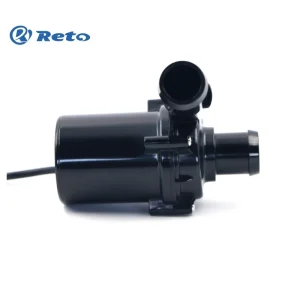
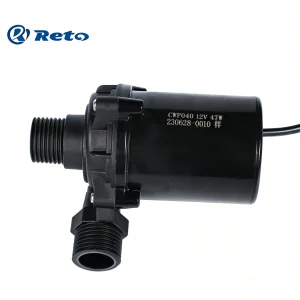
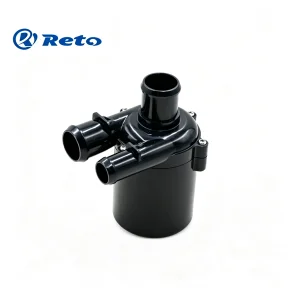
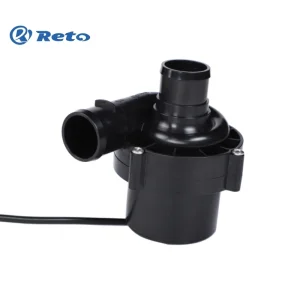
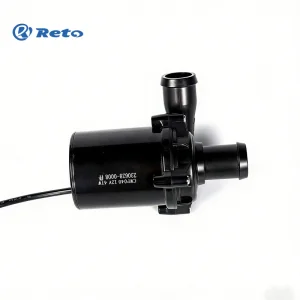
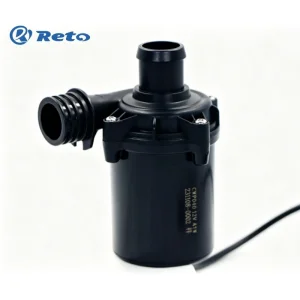
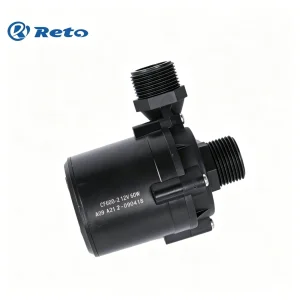
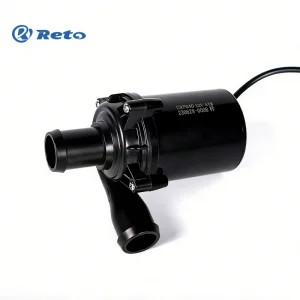
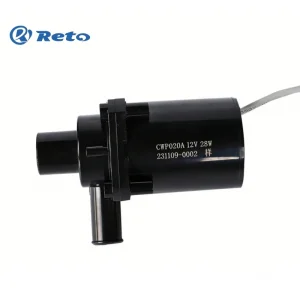
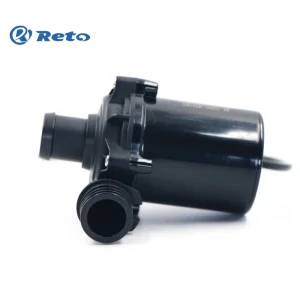
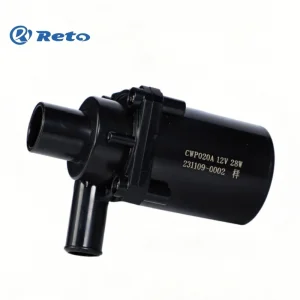
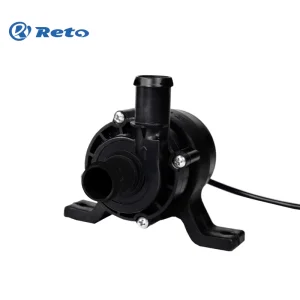
Precision-engineered BLDC pump lineup designed by China's leading OEM/ODM manufacturing facilities for sanitaryware, smart toilets, and micro-fluid circulation.
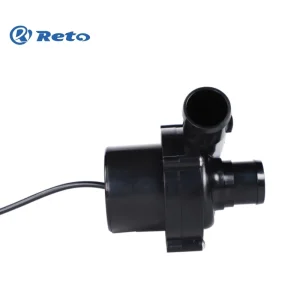
The global demand for low-pressure fluid boosting architectures has experienced exponential growth over the past decade. Driven by urbanization, high-density residential developments, rapid proliferation of smart sanitary hardware, and stringent water-efficiency regulations, industrial systems engineers face a common challenge: insufficient line pressure and dynamic flow instability. Municipal supply pressures frequently drop below 0.15 MPa in high-rise residential installations or remote off-grid infrastructures, rendering traditional gravity-fed or fixed-displacement AC pumps ineffective.
Modern micro-fluidic applications require compact, highly responsive, and energy-efficient boosting hardware capable of delivering consistent hydraulic head without generating structure-borne vibration or excessive acoustic signatures. Consequently, top-tier global equipment manufacturers (OEMs) have shifted their sourcing focus toward specialized China low pressure booster pump factories. Concentrated in advanced manufacturing clusters such as Xiamen, Fujian, and the Yangtze River Delta, specialized manufacturers like Xiamen Reto Electric Appliances Co., Ltd. have pioneered the transition from legacy AC brushed pump designs to sensorless Brushless DC (BLDC) architectures.
China's manufacturing ecosystems integrate precision magnetic material processing (NdFeB magnets), automated copper stator winding, micro-controller SMT assembly, and automated hydraulic testing within tight geographic radii. This enables rapid prototype iterations and exceptional unit-to-unit consistency.
Leading factories move beyond off-the-shelf components. By utilizing Computational Fluid Dynamics (CFD) and 3D transient flow simulations, impellers and volute chambers are custom-molded to match exact pressure-versus-flow curves required by OEM clients.
Premier manufacturing plants operate under IATF 16949 automotive quality management standards. Every single pump undergoes 100% end-of-line testing for pressure differential, insulation resistance, water-tightness, and acoustic emissions.
A low-pressure booster pump is fundamentally tasked with adding kinetic and static pressure energy to a fluid stream operating under low NPSH (Net Positive Suction Head) conditions without inducing cavitation, thermal degradation, or electrical overload. Understanding the underlying engineering matrix is vital for procurement directors and system architects.
Unlike brushed DC motors that suffer from carbon brush wear, mechanical friction, and electrical noise (EMI), BLDC motors utilize electronic commutation via Field-Oriented Control (FOC). Microprocessor-driven algorithms monitor back-EMF to precisely control phase switching, maximizing electromagnetic energy conversion while generating zero carbon dust.
Conventional pumps rely on mechanical rotary shaft seals, which inevitably leak over extended duty cycles due to shaft wear. Modern low-pressure booster pumps employ a magnetic drive isolator structure. The wet rotor and impeller are entirely sealed within a non-magnetic containment chamber, eliminating dynamic shaft seals and achieving true zero-leakage security.
To maximize hydraulic pressure output from micro-scale motor footprints, pump chambers feature closed centrifugal impellers molded from high-rigidity engineered thermoplastics (PPS/PPO). Combined with high-precision zirconia or silicon carbide ceramic shafts, friction coefficients are reduced by up to 40% compared to stainless steel counterparts.
Below is a generalized operational envelope comparison between conventional low-pressure pumps and advanced BLDC booster pumps manufactured by certified OEM facilities in China:
| Performance Parameter | Legacy AC Booster Pumps | Standard Brushed DC Pumps | Advanced BLDC Booster Pumps (RETO Standard) |
|---|---|---|---|
| Operating Voltage | 110V / 220V AC | 12V / 24V DC | 12V / 24V DC (Wide-Voltage Range) |
| Motor Lifespan (Continuous) | 5,000 – 10,000 Hours | 1,500 – 3,000 Hours | 30,000 – 50,000+ Hours |
| Acoustic Level (at 1 meter) | 50 – 62 dB(A) | 45 – 55 dB(A) | < 32 – 40 dB(A) Silent Operation |
| Ingress Protection (IP) | IP44 – IP54 | IP54 – IP65 | IP67 / IP68 Fully Submersible Options |
| Speed & Flow Control | Single Speed / Mechanical Switch | Voltage Throttling | PWM / 0-10V Speed Signal / FG Feedback |
| Protection Features | Thermal Fuse Only | External Fuse | Over-Voltage, Over-Current, Dry-Run, Locked-Rotor |
Low-pressure booster pumps are critical sub-assemblies across a vast spectrum of residential, commercial, and industrial equipment. Factory customization ensures seamless mechanical and electrical coupling into existing architectures.
Modern tankless smart toilets depend heavily on micro booster pumps to supply instantaneous, high-impulse flushing action and precise warm-water bidet cleansing pressure, even in high-rise buildings where municipal line pressure is inadequate (< 0.1 MPa).
Electric vehicles and energy storage systems (ESS) utilize specialized 12V/24V BLDC circulation pumps to push glycol coolants through battery cooling plates and power electronics, preventing thermal runaway with extreme component reliability.
Commercial Reverse Osmosis (RO) systems and tankless hot water recirculators demand silent, food-grade certified (NSF/FDA compliant material) booster pumps capable of continuous operation against high back-pressure without thermal degradation.
Navigating global market access requires strict adherence to international regulatory standards. Leading Chinese booster pump manufacturers maintain full compliance frameworks to streamline OEM product integration across North America, Europe, Asia-Pacific, and Latin America.
Certified quality management systems govern every stage of production. From APQP (Advanced Product Quality Planning) to PPAP (Production Part Approval Process), manufacturing operations follow zero-defect automotive protocols.
All raw materials—including magnetic rotors, copper wire, epoxy potting resins, and plastic housings—undergo third-party chemical laboratory testing to guarantee absence of hazardous substances and total European compliance.
For sanitaryware and beverage dispensing applications, pumps are constructed using food-grade materials that satisfy global drinking water standards including NSF/ANSI 61, FDA, and WRAS certifications.
The next decade of low-pressure fluid control engineering is defined by digitalization, intelligence, and hyper-efficiency. China's top R&D facilities are actively pioneering three primary technological vectors:
Next-generation BLDC pumps incorporate LIN/CAN bus protocols and micro-chip diagnostics, allowing master device controllers to read real-time pump rpm, operating temperature, current draw, and fluid pressure, enabling predictive maintenance.
By refining magnetic slot-pole combinations and applying sine-wave FOC drive algorithms, cogging torque is virtually eliminated. Combined with rubber isolator mounts, operating acoustic profiles drop below 30 dB(A).
Ultra-low dynamic loss impellers engineered through 3D additive fluid optimization reduce energy consumption by up to 25% compared to legacy BLDC models, meeting EU ErP strict energy efficiency directives.
Essential technical insights for engineering procurement teams evaluating China low pressure booster pump factories.
Low pressure booster pumps are specifically optimized to operate efficiently under minimal incoming suction head (low NPSH). Unlike standard pumps that require substantial positive inlet pressure to avoid cavitation and air-locking, low pressure boosters feature specialized impeller inlet geometry and high-torque BLDC motors designed to generate immediate dynamic pressure elevation even when inlet pressure is near zero.
BLDC motors offer significant advantages for smart toilet applications: 1) Quiet Performance (<38 dB), crucial for residential bathrooms; 2) Compact Footprint, allowing easy mechanical integration inside slim toilet chassis; 3) Variable Speed Control via PWM, enabling precise adjustments for bidet spray pressure; and 4) Long Operational Lifespan (>30,000 hours) with zero risk of carbon brush spark or failure.
Yes. Advanced factories like Xiamen Reto Electric Appliances Co., Ltd. offer full OEM/ODM engineering customization. This includes tailored operating voltages (e.g., 12V, 24V, 48V DC), customized Q-H (flow vs. head) curves, specific inlet/outlet port configurations (quick-connect, thread, barb), custom wire harness lengths, and specialized firmware electronic protection settings.
State-of-the-art BLDC pumps incorporate multi-tier intelligent protection algorithms within the PCB driver: 1) Dry-Run Protection (stops motor if no fluid is detected); 2) Locked-Rotor Protection (cuts power if debris jams the impeller); 3) Over-Voltage & Over-Current Protection; and 4) Reverse Polarity Protection.
Explore additional specialized BLDC water booster pump solutions, submersible micro-pumps, and inline circulating solutions for global commercial applications.