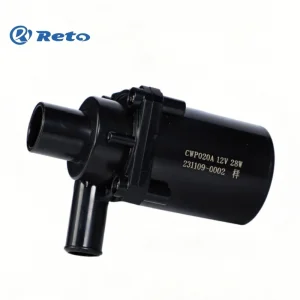
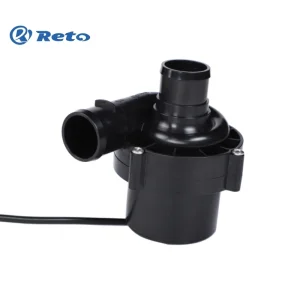
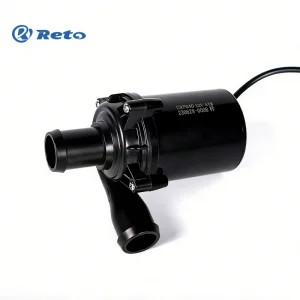
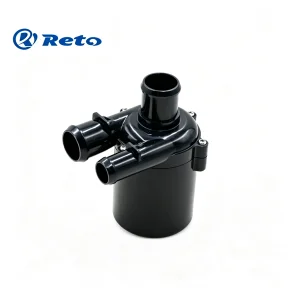
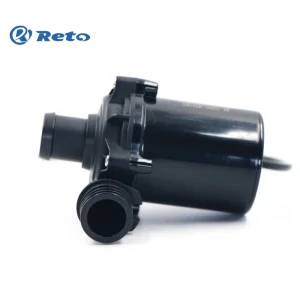
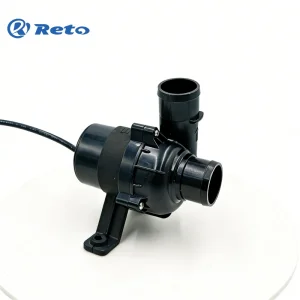
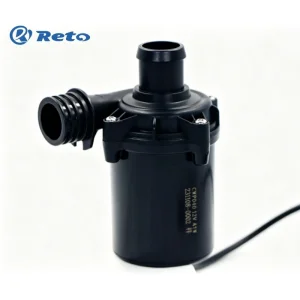
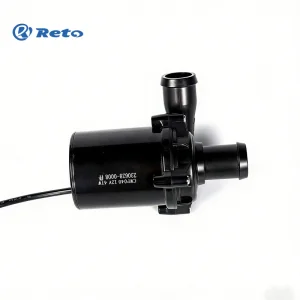
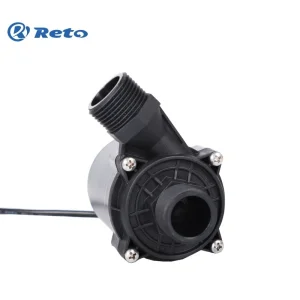
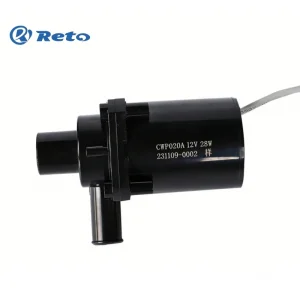
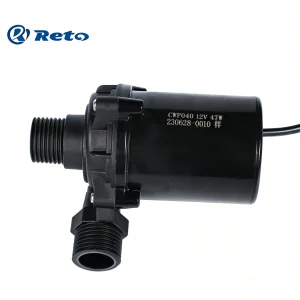
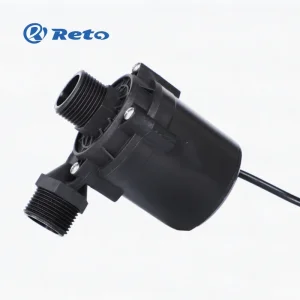
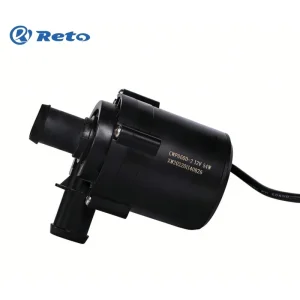
Precision-engineered 12V / 24V brushless DC water pumps optimized for sanitary ware, smart bidets, solar water heating, and high-efficiency hydronic circulation.
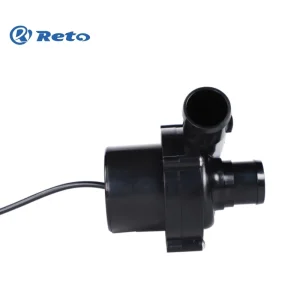
In modern residential, commercial, and industrial thermal management, the demand for immediate hot water availability has evolved from a luxury expectation into a baseline efficiency metric. Globally, standard domestic and commercial plumbing configurations without dedicated recirculation loops waste millions of gallons of potable water annually while users wait for cold water to purge from supply lines. According to environmental fluid dynamics studies, an average household of four loses between 7,000 to 12,000 gallons of clean water per year purely due to thermal latency between the water heater tank and remote points of use (POU).
To eliminate this structural inefficiency, engineers and MEP (Mechanical, Electrical, Plumbing) system designers rely heavily on Custom Hot Water Recirculating Pumps. These compact, highly optimized pump units continuously or dynamically move cooled water back through the water heater, maintaining a pressurized loop of hot water directly adjacent to all fixture outlets.
When partnering with a specialized hot water recirculating pump manufacturer, OEM buyers must evaluate two primary architectural implementations across global markets:
Widely deployed in new commercial construction and high-end residential builds, a dedicated return line creates a closed, dedicated loop running from the farthest fixture back to the tank or tankless heater. Custom BLDC pumps engineered for this environment require continuous or sensor-triggered moderate pressure heads with optimized power consumption to prevent pipe erosion while ensuring steady velocity.
Common in existing building retrofits where installing a dedicated return pipe is cost-prohibitive. The system utilizes the existing cold water pipe as the temporary return path via a thermostatic valve placed under the furthest sink. Pumps designed for this scenario require precise pressure management and check-valve integration to eliminate backflow or cross-contamination into the potable cold water line.
Traditional AC asynchronous recirculating pumps operating 24/7 introduce massive standby thermal losses through uninsulated pipe runs. Modern engineering prioritizes Smart DC Brushless (BLDC) Recirculation Units operating on demand or controlled via algorithmic usage profiling, reducing overall system power consumption by up to 85% compared to legacy shaded-pole AC induction pumps.
As energy performance standards such as the EU Eco-design Directive and US Department of Energy (DOE) pump efficiency regulations tighten globally, the pump industry has shifted decisively toward Brushless DC (BLDC) Permanent Magnet Synchronous Motor Technology.
Eliminating mechanical carbon brushes removes physical friction, reduces electrical noise (EMI), and extends pump service life beyond 50,000 continuous operating hours. Field-Oriented Control (FOC) algorithms enable seamless pulse-width modulation (PWM) speed tuning.
Sealless magnetic drive construction isolates the wet hydraulic chamber completely from the dry stator. This eliminates mechanical shaft seal degradation, preventing fluid leakage—a critical requirement in hot water systems operating up to 100°C.
Using high-precision ceramic (Zirconia/Silicon Carbide) shafts and bearings ensures ultra-low friction, high thermal resistance, and acoustic performance below 38 to 42 dB(A), making units virtually silent when installed under cabinets or inside appliances.
Custom hot water pumps must withstand continuous exposure to high temperatures, pressure fluctuations, and potential mineral scaling (calcium carbonate precipitation). Below is a technical comparison of housing materials and impeller designs utilized by OEM manufacturers:
| Material / Component | Thermal Limits | Corrosion & Scale Resistance | Potable Water Certifications | Primary Industrial / OEM Application |
|---|---|---|---|---|
| PPS / PPE Engineering Plastics | -20°C to +100°C | Exceptional resistance to chemical scaling & hard water | NSF/ANSI 61, FDA, WRAS | Smart Toilet Bidet Heating, Compact Water Heaters, Domestic Booster |
| Lead-Free Brass (C37700 / DZR) | -30°C to +110°C | High structural integrity, resistant to dezincification | NSF/ANSI 372, CE, RoHS | Residential Recirculation Lines, High-Pressure Hydronic Heating Loops |
| 304 / 316L Stainless Steel | -40°C to +125°C | Maximum resistance to aggressive, acidic, or deionized water | WRAS, KTW, ACS, NSF | Commercial Boilers, Food Processing Fluid Loops, Solar Thermal Loops |
Global B2B buyers seeking a reliable custom hot water recirculating pump manufacturer increasingly look to established precision manufacturing hubs like Xiamen, China. As a national high-tech manufacturing center, Xiamen Reto Electric Appliances Co., Ltd. exemplifies the strategic advantages of China’s mature electro-mechanical cluster:
From specialized copper wire winding, precision injection molding of PPS impellers, to micro-controller SMT board production—100% of critical sub-assembly suppliers are located within a 50km radius. This drastically cuts lead times and accelerates custom prototyping.
Utilizing automated motor winding machines, 100% dynamic balancing testers, and automated pressure decay testing rigs, production lines deliver over 2,000,000 units annually while maintaining defective rates below 50 PPM (parts per million).
Certified under IATF 16949 and ISO 9001 quality management systems, production processes follow rigorous Advanced Product Quality Planning (APQP) and Failure Mode and Effects Analysis (FMEA) protocols.
Factory customization extends far beyond simple label placement. Engineering teams tailor hydraulic head vs. flow curves (P-Q performance), customize voltage inputs (12V, 24V DC, or 110V/230V AC convertibility), adjust port configurations (threaded NPT/G-threads, quick-connect fittings, barb joints), and integrate custom communication protocols (PWM, 0-10V, LIN bus, RS485).
Custom hot water recirculating and booster pumps fulfill specialized fluid movement functions across a wide spectrum of modern consumer, commercial, and industrial equipment:
In modern intelligent sanitary appliances, compact 12V/24V micro BLDC booster pumps circulate and pressurize pre-heated water instantly to the cleaning nozzle. These pumps require rapid start-stop cycles, stall protection, dry-run protection, and operation under 40 dBA acoustic thresholds.
Solar thermal collectors require circulation pumps that operate efficiently under fluctuating temperatures (up to 100°C continuous, 120°C peak). Low-voltage DC solar pumps can be directly powered by small photovoltaic panels, creating off-grid, energy-neutral thermal circulation loops.
Floor heating manifolds require multi-stage variable speed recirculation pumps capable of pushing warm fluid through long, high-resistance PEX piping networks while maintaining uniform hydraulic pressure and zero cavitation.
Extending beyond residential plumbing, BLDC coolant pumps derived from high-temperature recirculating technology manage battery temperature conditioning and power electronics thermal loops in electric vehicles (EVs) and hybrid bus platforms.
Driven by global decarbonization goals, IoT expansion, and rising consumer expectations for instant domestic hot water, several key technology shifts define the roadmap for hot water recirculating pump development:
Next-gen pumps embed microprocessors with machine learning logic that automatically records household hot water usage patterns. The pump pre-heats lines 5 minutes prior to historically predicted use times, reducing electricity waste by up to 90% versus timer-based models.
Integration of Matter, Zigbee, Wi-Fi, and Bluetooth Low Energy (BLE) modules allows real-time monitoring of fluid temperatures, pressure drops, leakage warnings, and predictive maintenance alerts directly via smart home controllers.
As residential solar installations expand globally, 12V/24V/48V DC pumps that connect directly to PV panels or home battery storage without requiring AC/DC inverter conversion are becoming the default standard for eco-villas and off-grid living.
For engineering directors, procurement managers, and OEM product line executives, selecting the right supplier requires evaluating strict performance and compliance benchmarks. Use the checklist below during technical supplier audits:
| Evaluation Parameter | Standard Benchmark Requirement | Why It Matters for OEM Buyers |
|---|---|---|
| Hydraulic Performance (P-Q Curve) | Accurate flow (L/min) vs. Head (m) mapping at rated DC voltage | Ensures proper flow velocity without causing pipe wear or hydraulic noise |
| Thermal Endurance Test | Continuous operation at 85°C–100°C for >1,000 hours without head loss | Prevents field failures caused by impeller deformation or magnetic demagnetization |
| Ingress Protection (IP Rating) | IP67 or IP68 full submersible sealing rating | Protects drive electronics from condensation, humidity, and accidental flooding |
| Acoustic Noise Floor | < 40 dB(A) at 1 meter distance | Ensures end-user comfort in indoor, under-sink, or luxury bathroom installations |
| International Safety & Compliance | CE, RoHS, REACH, TÜV, IATF 16949, ISO 9001 | Guarantees friction-free customs clearance and risk-free global market entry |
High-flow, compact micro-DC pumps, smart toilet pressure boosters, and quiet submersible units engineered for global manufacturers.
Technical clarity on hot water recirculating pump selection, OEM customization options, installation parameters, and factory manufacturing standards.
Brushless DC (BLDC) pumps utilize permanent magnet rotors and electronic commutation rather than mechanical brushes or AC induction coils. This results in up to 70-85% higher electrical efficiency, significantly smaller physical footprints, infinitely variable speed control (via PWM or 0-10V signals), lower acoustic signatures (<40 dBA), and reduced operating temperatures that prevent thermal motor failure.
Yes. When specified with high-temperature materials such as Polyphenylene Sulfide (PPS) pump housings, Fluororubber (FKM) or EPDM static seals, and Zirconia ceramic shafts, BLDC recirculating pumps operate continuously at fluid temperatures up to 100°C (with intermittent spikes up to 120°C) without physical deformation or degradation of magnetic field strength.
Advanced BLDC pump controllers incorporate smart software algorithms that monitor motor current draw and rotor resistance. If air is detected inside the hydraulic chamber causing a sudden drop in fluid load, the intelligent controller automatically shuts off the power or initiates a protective retry cycle, preventing thermal buildup and bearing wear.
Xiamen Reto provides comprehensive OEM/ODM customization including: hydraulic flow rate and pressure head optimization, custom voltage inputs (12V, 24V, 48V DC), tailored inlet/outlet port geometry (threaded G/NPT, barbed, quick-connect), dynamic speed control interfaces (PWM, 0-10V, FG signal), custom cable length and connector types, as well as private labeling and specialized packaging.
For potable water applications, pump wet-end materials must comply with drinking water contact standards such as NSF/ANSI 61 and NSF/ANSI 372 (Lead-Free) in North America, WRAS in the United Kingdom, KTW/W270 in Germany, and ACS in France. Electrical and electromagnetic safety is verified via CE, RoHS, REACH, and TÜV certifications.
With centralized supply chain clusters in Xiamen, standard custom OEM sample development and hydraulic tuning take approximately 7 to 15 business days. Mass production lead times generally range between 20 to 30 days, backed by an annual production capacity exceeding 2,000,000 pump units.