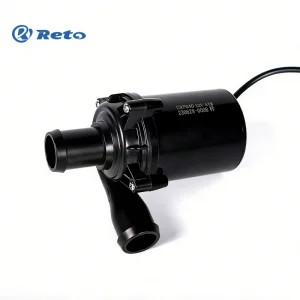
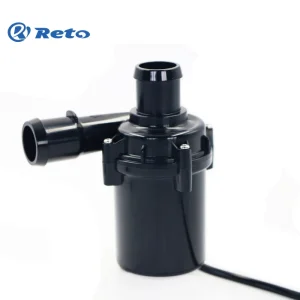
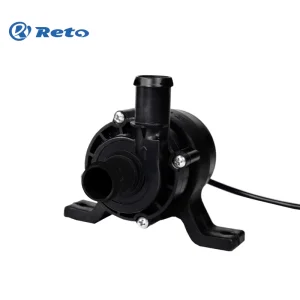
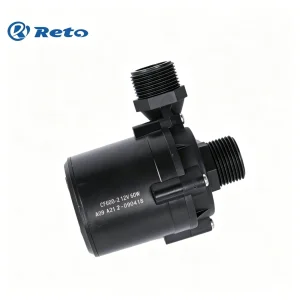
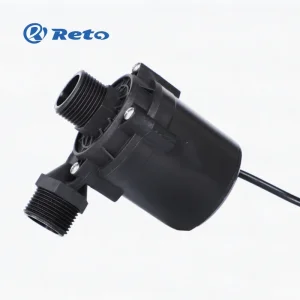
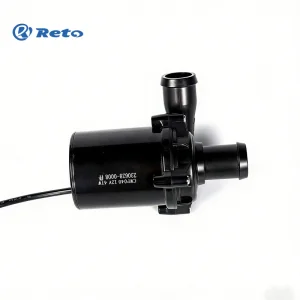
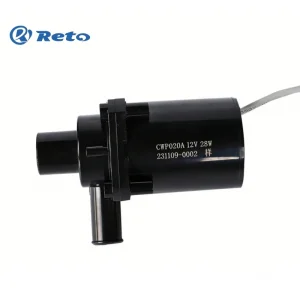
Explore high-performance brushless DC (BLDC) water pumps engineered for high thermal stability, quiet operation, and long service life in automotive and smart fixture applications.
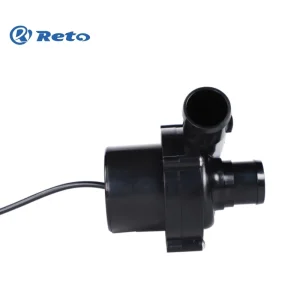
In-depth analysis of how electric vehicle battery cooling pumps act as the vital heart of modern automotive BTMS (Battery Thermal Management Systems).
As the global automotive industry accelerates its transition toward full electrification, battery thermal management systems (BTMS) have moved from peripheral support components to mission-critical core architectures. The performance, range, fast-charging safety, and operational lifespan of Lithium-ion and Solid-State battery chemistry depend directly on maintaining internal temperatures within a narrow thermal window—typically between 15°C and 35°C. At the core of this closed-loop liquid thermal loop is the EV battery cooling pump.
Historically, legacy internal combustion engine (ICE) vehicles relied on mechanical belt-driven water pumps that operated proportionally to engine RPM. In contrast, modern electric vehicles (EVs), hybrid electric vehicles (HEVs), and fuel cell electric vehicles (FCEVs) require decoupled, highly responsive, continuously variable electronic coolant circulation. Brushless DC (BLDC) magnetic-drive pumps manufactured by specialized OEM factories in China have emerged as the global benchmark for meeting these stringent automotive requirements.
This technical whitepaper examines the engineering architecture, localized application scenarios, supply chain advantages, and technical roadmaps of Chinese EV battery cooling pump manufacturers, serving Tier-1 automotive integrators, commercial vehicle OEMs, and stationary Energy Storage System (ESS) developers worldwide.
Unlike standard commercial water pumps, automotive battery cooling pumps must survive extreme thermal shock cycles (-40°C to +125°C), continuous exposure to aggressive ethylene glycol-water liquid mixtures, intense vibration spectrums (ISO 16750-3), and electromagnetic interference (CISPR 25 Class 5). Leading Chinese manufacturers now integrate real-time LIN 2.1 / CAN-bus diagnostic telemetry directly into the pump driver microcontrollers.
Dissecting the electromechanical innovations behind magnetic drives, canned motor isolation, and intelligent FOC vector control.
Next-generation EV platforms operating on 800V architecture demand auxiliary cooling pumps powered either via high-efficiency DC-DC step-down modules or direct high-voltage BLDC drivers equipped with Silicon Carbide (SiC) MOSFETs, offering sub-millisecond dynamic speed control response.
Traditional dynamic mechanical shaft seals are vulnerable to degradation and liquid coolant leakage over extended vehicle lifespans. Chinese manufacturers utilize static-seal magnetic drive isolation technology, completely isolating the motor stator from liquid coolant channels to achieve zero leak risk.
Advanced Field Oriented Control (FOC) algorithms eliminate fragile physical Hall sensors. Driver ICs continuously evaluate back-EMF feedback, guaranteeing smooth torque ripple delivery, preventing cavitation under high flow conditions, and maintaining acoustic noise levels under 38 dB(A).
| Performance Metric | Standard Brushless DC Water Pump | Automotive Grade EV Battery Cooling Pump (IATF 16949) | Immersion / Direct-Cooling High-Flow Pump |
|---|---|---|---|
| Operating Voltage | 12V / 24V DC | 9V – 32V DC (Automotive Transient Compatible) | 24V DC / 48V DC / 400V High Voltage |
| Working Lifetime | 10,000 – 20,000 Hours | 40,000 – 50,000+ Hours | > 60,000 Hours Continuous Duty |
| Thermal Range | -20°C to +80°C | -40°C to +125°C Ambient / Liquid | -40°C to +105°C (Specialized Fluids) |
| Communication Protocol | ON/OFF, Basic PWM | LIN 2.1, CAN Bus 2.0B / CAN-FD, PWM Feedback | Automotive Ethernet / CAN-FD Smart Telemetry |
| Sealing & Ingress | IP67 Waterproof | IP68 / IP69K (High-Pressure Washdown) | Hermetic Static Seal (Zero Hydrocarbon Leakage) |
| Diagnostic Capability | Stall Protection Only | Dry-run, Over-temp, Over-current, Cavitation Detection | Predictive AI Fault Detection & Pressure Telemetry |
From passenger electric sedans operating in sub-zero climates to stationary containerized BESS arrays, technical pumps adapt to distinct operational stress profiles.
In modern passenger vehicles, the electronic water pump is integrated into a thermal management module alongside multi-way directional valves. The pump actively circulates 50/50 water-glycol coolant between the battery cold plates, drive motor inverter, passenger cabin HVAC heat exchanger, and radiator. Precision speed control allows the vehicle's electronic control unit (ECU) to throttle pump power when battery temperatures are optimal, saving up to 3% in overall vehicle energy consumption.
Commercial heavy-duty electric trucks and transit buses feature high-capacity battery packs (exceeding 300 kWh to 500 kWh) operating under continuous duty cycles. China EV battery cooling pump manufacturers provide high-power (200W to 600W) 24V/48V BLDC pumps capable of delivering flow rates up to 100 L/min against high system backpressures, ensuring uniform temperature distribution across hundreds of connected battery cells.
Global utility-scale solar and wind energy storage installations rely on liquid-cooled battery enclosures to prevent localized hot-spot degradation. Chinese factories produce continuous-duty, high-reliability BLDC pumps designed to operate non-stop for over 10 years in remote desert or off-shore containerized ESS environments, supporting Modbus or CAN communication protocols.
Ultra-fast EV chargers (350kW to 480kW+) generate intense localized heat in both the power electronics cabinets and the flexible charging cables attached to the vehicle inlet. Compact high-pressure BLDC circulating pumps continuously force specialized synthetic dielectric fluids or glycol mixtures through slender liquid-cooled cable jackets, allowing thin cable designs that remain ergonomic for vehicle owners.
How concentrated industrial clusters, automated production lines, and localized raw materials empower global OEMs with unprecedented competitive value.
China has established an unassailable ecosystem advantage in the manufacturing of electric vehicle thermal management components. The synergy between upstream raw material suppliers, specialized motor component molders, automated winding equipment makers, and tier-1 testing facilities creates a resilient infrastructure for global buyers.
Proximity to leading rare-earth neodymium (NdFeB) magnet refining hubs in Fujian and Zhejiang ensures constant supply of high-coercivity permanent magnets capable of maintaining magnetic strength up to 150°C without demagnetization.
Modern Chinese pump factories operate fully automated stator winding, high-precision balancing, dynamic vacuum epoxy potting, and 100% automated End-of-Line (EOL) testing rigs verifying pressure, flow rate, noise, and power consumption.
Equipped with modern CFD (Computational Fluid Dynamics) modeling and rapid 3D mold tooling, Chinese manufacturers reduce sample prototype development cycles from standard 6 months down to 3–4 weeks for global OEM clients.
Adhering to international automotive standards to guarantee smooth integration into global automotive and industrial supply chains.
Fully compliant with strict automotive quality management systems (IATF 16949), ensuring zero-defect quality control across mass production batches through PPAP (Production Part Approval Process) Level 3 documentation.
All materials comply strictly with European chemical safety regulations (REACH/RoHS), with independent TÜV certification for electrical safety, electromagnetic compatibility (EMC), and environmental sustainability.
Engineering teams provide customized firmware flash for customized LIN bus command matrices, diagnostic error codes (DTC), fault recovery protocols, and target flow-pressure performance curve mapping.
Comprehensive engineering responses addressing core technical queries raised by global procurement directors and automotive engineers.
Explore additional compact, high-head, quiet-operating brushless water pump models manufactured for international distribution and custom industrial applications.