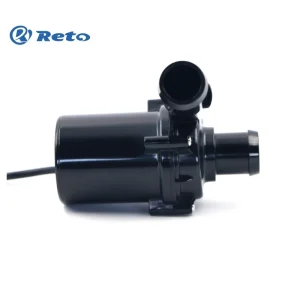
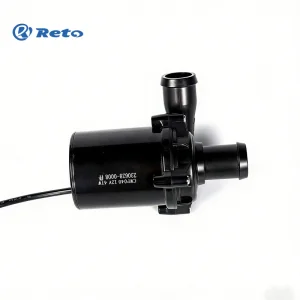
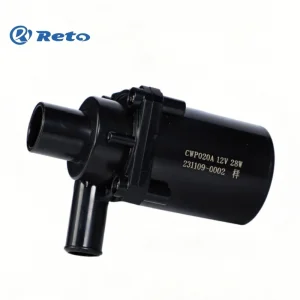
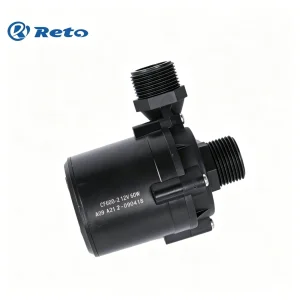
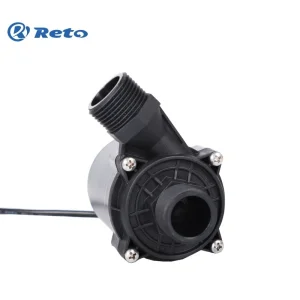
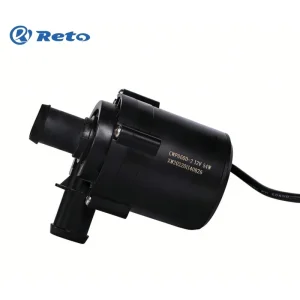
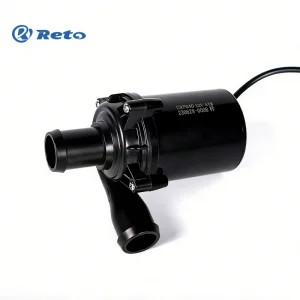
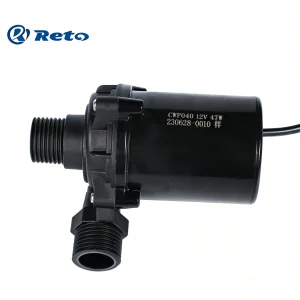
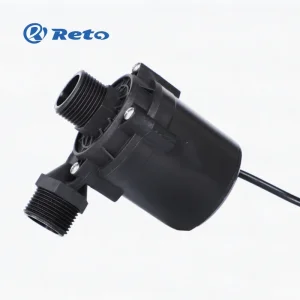
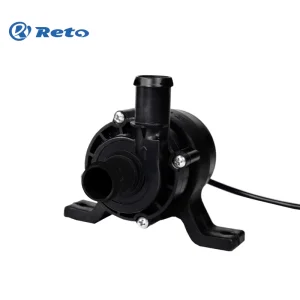
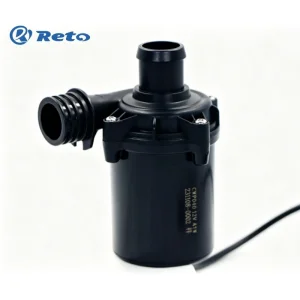
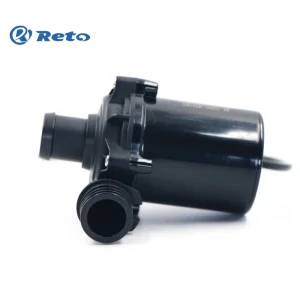
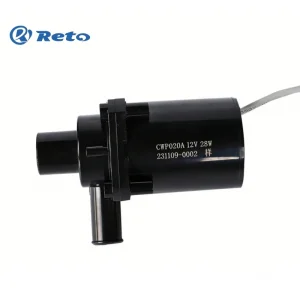
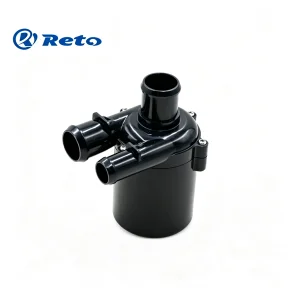
Engineered for quiet operation, compact integration, and extended operational lifespans in demanding liquid transfer environments.
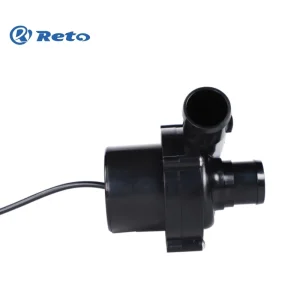
The global fluid dynamics and micro-pump industry is undergoing a systemic paradigm shift. Traditional brushed AC/DC pumps are rapidly being phased out across high-tier consumer, automotive, and commercial sectors in favor of Brushless Direct Current (BLDC) technology. This transition is governed by rigid energy efficiency directives (such as EU EcoDesign regulations and US DOE efficiency benchmarks), the rapid electrification of thermal management systems, and consumer demand for near-silent acoustic environments.
In modern industrial applications—ranging from New Energy Vehicle (NEV) battery liquid cooling loops to high-precision medical diagnostics, zero-line-pressure smart sanitary flushing systems, and industrial laser chiller modules—the micro pump is no longer merely a passive mechanical displacement component. It functions as an integrated, intelligent mechatronics module equipped with closed-loop PWM/Lin-Bus speed feedback, real-time stall detection, and adaptive hydraulic pressure modulation.
As original equipment manufacturers (OEMs) attempt to shrink system form factors while increasing fluid flow velocity and dynamic pressure head, engineering teams face significant physical constraints. Managing impeller cavitation, heat dissipation from continuous duty cycles, acoustic resonance within thin-walled chassis, and fluid compatibility under extreme thermal gradients (-40°C to +125°C) requires deep technical competence. Sourcing standard off-the-shelf pumps frequently results in sub-optimal system integration, premature seal failure, and elevated operational noise.
BLDC motors eliminate mechanical brush friction and carbon dust contamination, yielding up to 35% higher electrical-to-hydraulic efficiency compared to conventional brushed DC units.
By replacing dynamic mechanical shaft seals with static O-ring isolation and magnetic rotor coupling, liquid leakage paths are completely eliminated in critical pressure zones.
Advanced hydraulic chamber optimization and dynamic balancing algorithms minimize internal turbulence and structural resonant frequencies inside sensitive host devices.
The global manufacturing ecosystem for specialized brushless DC pumps has concentrated in advanced industrial clusters such as Xiamen, Fujian. China’s competitive advantage in custom micro-pump manufacturing has evolved beyond traditional labor cost arbitrage into a high-technology flywheel characterized by vertical supply chain integration, extreme prototyping speed, automated quality verification, and massive capital reinvestment in R&D.
A specialized manufacturer like Xiamen Reto Electric Appliances Co., Ltd. exemplifies this industrial maturity. By controlling every critical step—from precision plastic injection molding of polyphenylene sulfide (PPS) and polyoxymethylene (POM) impellers, automated motor stator winding, to SMT PCB driver fabrication—Chinese pump specialists achieve cost-to-performance metrics that Western competitors cannot match.
| Evaluation Parameter | Standard Off-the-Shelf Pumps | Reto Custom Chinese Manufacturing Solutions |
|---|---|---|
| Design Adaptability | Fixed voltage, static head curves, rigid port orientations | 100% Custom hydraulic housing, PWM/Lin-Bus integration, custom voltage (6V-48V) |
| R&D Prototype Lead Time | 8 – 16 Weeks (High NRE Costs) | 14 – 21 Days (Rapid SLA/SLS 3D Sampling & Dynamic Flow Simulation) |
| Rotor & Shaft Materials | Standard Stainless Steel 304 / Ferrite Magnet | High-Purity Zirconia Ceramic Shaft + NdFeB Rare Earth Permanent Magnets |
| Quality & Automotive Audits | Basic ISO9001 Compliance | Dual ISO9001 & IATF 16949 Automotive Quality Management Certified |
| Noise Control Standards | 45 – 55 dB(A) ambient motor noise | Sub-35 dB(A) low-frequency acoustic damping for residential/medical environments |
Furthermore, Chinese manufacturing agility directly mitigates global product lifecycle risks. When an OEM encounters unexpected field issues such as water hammer pressure spikes, fluid crystallization, or elevated ambient temperatures, Chinese R&D teams can modify rotor geometry, alter PCB thermal management layouts, or re-formulate elastomer sealing compounds within days, executing rapid sample validation cycles that keep global product launches on schedule.
Exploring how custom BLDC pump architectures meet the rigorous physical requirements of modern smart hardware.
Tankless smart toilets rely entirely on high-flow micro DC pressure pumps to generate powerful siphon flushing under low municipal line pressure (<0.15 MPa). Pumps must feature instant high torque start-ups, zero backflow degradation, and food-grade/sanitary material certifications.
New Energy Vehicles require continuous circulation of glycol coolants to keep lithium battery packs, power electronics, and traction motors within an optimal 25°C - 35°C thermal window. Pumps must withstand harsh automotive vibration, automotive EN55025 EMC standards, and continuous thermal cycling.
Domestic instant hot water systems require silent recirculation pumps capable of pushing hot water (>85°C) without vapor locking or thermal degradation of internal seals. Long-term scale resistance and dry-run protection algorithms are mandatory features.
Food-contact beverage equipment demands FDA, NSF, and WRAS compliant materials. Pumps must maintain precise, non-pulsating fluid velocity over years of continuous operation without leaching phthalates, heavy metals, or organoleptic impurities into drinkable liquids.
Reverse Osmosis (RO) systems demand compact booster pumps capable of maintaining steady operating head against high membrane osmotic pressures. Micro DC pumps must deliver consistent flow curves even during severe inlet line pressure fluctuations.
Water-heated and cooled mattress topper circulation modules operate within inches of sleeping users. The primary requirement is near-zero vibration transmission and an operating sound profile under 28 dB(A), coupled with 24/7 continuous duty safety features.
When global procurement directors and lead mechanical engineers evaluate high-performance pump suppliers, simple unit pricing is rarely the decisive factor. Total Cost of Ownership (TCO), product failure rates (measured in DPPM - Defective Parts Per Million), certification compliance, and manufacturing scalability dominate supplier qualification audits.
Before issuing an RFP or signing a long-term supply agreement with a pump manufacturer, engineering buyers should verify five critical validation metrics:
Expert answers regarding custom BLDC pump engineering, manufacturing lead times, and application specifications.
BLDC (Brushless DC) pumps replace mechanical carbon brushes with electronic commutation drivers. This eliminates physical brush wear, carbon dust contamination, and electrical sparking, resulting in up to 3x longer operational lifespans (>30,000 hours), significantly reduced acoustic noise (<35 dB), higher electrical efficiency, and full support for PWM dynamic speed regulation.
For standard custom modifications (such as altering operating voltage, lead wire connectors, or nozzle barbs), prototype samples are typically delivered within 7 to 10 days. For fully custom hydraulic housing design, impeller 3D modeling, and dedicated mold tooling, initial production-grade samples are completed within 21 to 30 days.
Yes. We offer specialized high-temperature housing options using reinforced Polyphenylene Sulfide (PPS) and high-purity Zirconia (ZrO2) ceramic shafts capable of continuous operation in fluids up to 100°C - 125°C. For chemical or food contact, we utilize FDA/NSF certified EPDM, FKM (Viton), or silicone seals paired with corrosion-resistant magnetic coupling.
Xiamen Reto operates under ISO9001 and automotive-grade IATF 16949 quality management systems. Every single production pump undergoes 100% End-of-Line (EOL) automated testing for flow rate, pressure head, current draw, seal tightness, and acoustic sound levels prior to vacuum packing and shipping.
Our custom micro DC and BLDC pump platforms support standard 12V DC and 24V DC operating voltages, as well as specialized 5V, 36V, or 48V DC configurations. Control options range from simple direct current turn-on to advanced 5V/3.3V PWM speed feedback, FG tachometer signal outputs, and LIN-Bus automotive protocols.
While standard catalogue evaluation units have no minimum order threshold, commercial OEM custom production runs typically start at an MOQ of 500 to 1,000 units depending on the level of specialized tooling, custom wire harnesses, and specific material formulations required.
From submersible pressure boosters to external circulation units, discover our specialized pump portfolio.