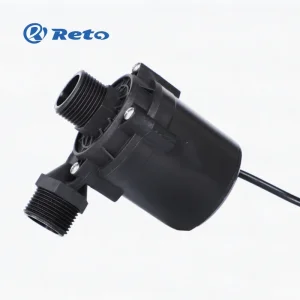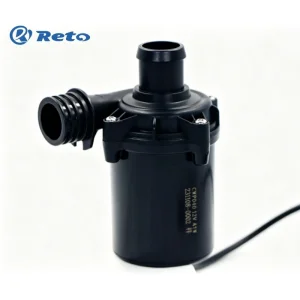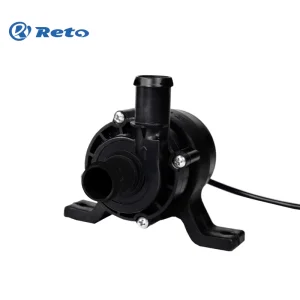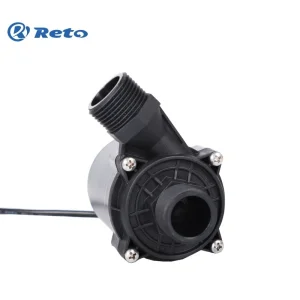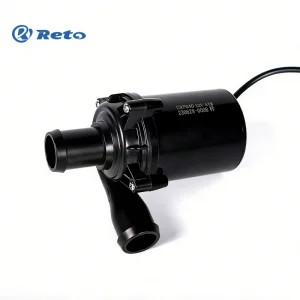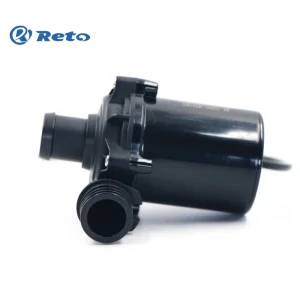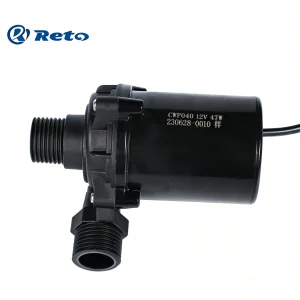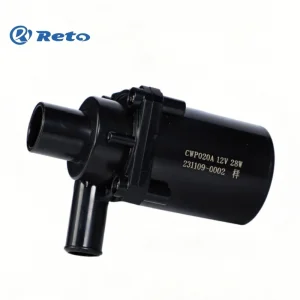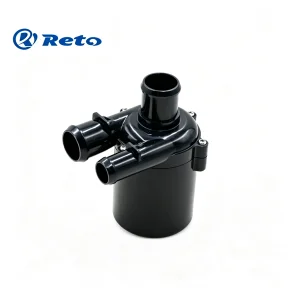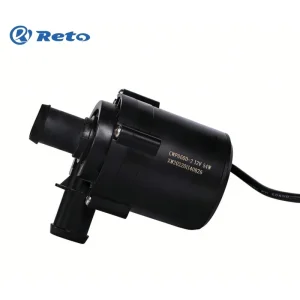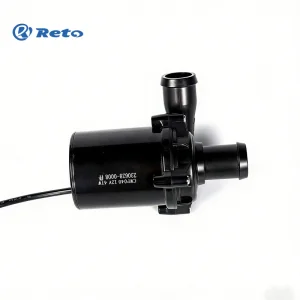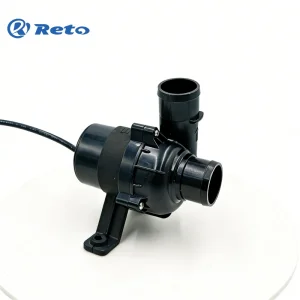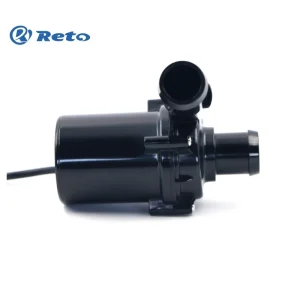
Custom 12V potable water booster pump Pump For Smart Toilet Manufacturer, Factory
View Product Details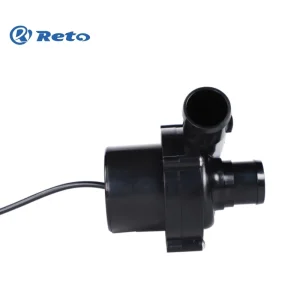
China DC Energy-Saving Circulating Pump for Sanitary Ware Supplier, Manufacturer
View Product DetailsAnalyzing thermal dissipation bottlenecks in modern high-voltage Electric Vehicles and high-performance liquid circulation loops.
The global transition toward Electric Vehicles (EVs) and high-density electrification has radically redefined thermal management engineering. Unlike internal combustion engine (ICE) vehicles that rely on mechanically driven water pumps operating within relatively forgiving temperature bands, modern Electric Vehicles demand precise, intelligent, and continuously variable coolant flow. At the center of this transition is the EV overheating water pump issue, a critical point of operational failure that directly impacts battery pack safety, motor efficiency, silicon carbide (SiC) inverter reliability, and fast-charging performance.
As EV architectures transition from 400V to ultra-fast 800V charging systems, heat flux densities within traction motors and Lithium-ion battery modules have increased exponentially. During peak energy transfer—such as extreme acceleration or DC fast charging (Level 3)—the heat generated within battery cells can cause rapid localized thermal spikes. If the auxiliary electric coolant pump experiences motor stall, impeller cavitation, thermal de-magnetization, or control signal latency, the liquid cooling loop fails. This leads to severe thermal derating, catastrophic battery pack degradation, and, in worst-case scenarios, thermal runaway.
Automotive system integrators and tier-1 procurement engineering teams across Europe, North America, and Asia-Pacific report that thermal management pump failures stem from five interconnected mechanical and electrical breakdown vectors:
How specialized OEM/ODM manufacturing hubs like Xiamen Reto Electric Appliances deliver ultra-reliable BLDC thermal management solutions.
Leading Chinese custom EV water pump factories operate under strict automotive-grade quality control protocols. 100% automated end-of-line testing ensures zero-defect delivery across electrical parameters, pressure limits, and hermetic sealing integrity.
By eliminating physical rotary shaft seals, Chinese factories utilize static stainless-steel or ceramic isolation shells. The motor magnet drives the impeller through magnetic coupling, ensuring a 100% leak-proof design that completely resolves seal degradation overheating issues.
Advanced Chinese custom pump manufacturers integrate Field Oriented Control (FOC) and sensorless BLDC algorithms. This allows real-time fluid resistance estimation, smooth soft-starting without torque spikes, and dynamic speed regulation matching VCU cooling requests.
Located in precision manufacturing hubs like Xiamen, factories benefit from complete vertical integration—from copper wire winding and PCB SMT assembly to tool-making and hydraulic fluid testing—reducing OEM sample development from months to under 14 days.
Mass-scale production capacity coupled with lean automation allows Chinese manufacturers to offer automotive-grade BLDC pumps at highly competitive cost points without compromising material specs like PPS housing, ceramic shafts, and high-temp EPDM O-rings.
Comprehensive engineering comparison illustrating how Brushless DC magnetic drive pumps permanently resolve overheating and fluid leakage risks.
| Performance / Architecture Parameter | Legacy Mechanical / Brushed Pumps | Custom OEM BLDC Water Pumps (Xiamen Reto Standard) |
|---|---|---|
| Motor Architecture & Commutation | Physical Carbon Brushes (High Friction & Sparking) | Brushless Electronic Commutation (FOC Vector Control) |
| Sealing System | Dynamic Rubber Mechanical Seals (Prone to wear & fluid leak) | Static Magnetic Isolation Chamber (100% Leak-Proof, IP68) |
| Continuous Operational Lifespan (MTBF) | 2,000 – 5,000 Hours Maximum | 30,000 – 50,000 Hours Continuous Duty |
| Thermal Resistance & Ambient Capability | Max 75°C - 85°C (Susceptible to magnet decay) | -40°C to +125°C Continuous Liquid Operating Temp |
| Acoustic & Vibration Output | > 55 dB(A) with high mechanical noise | Ultra-Quiet < 38 dB(A) at nominal operating load |
| Speed Control & Intelligence | Fixed Speed or Primitive Voltage Reduction | PWM / LIN-Bus / CAN-Bus Speed Modulation & Diagnosis |
| Protection Features | Minimal (Fuse blow upon rotor lock) | Locked-Rotor, Dry-Running, Over-Voltage, Over-Current, Thermal Shutdown |
Expanding high-reliability BLDC pump technology into commercial, sanitary, domestic, and industrial fluid systems.
While the thermal management of EV batteries and power electronics represents a primary growth driver, the core technology used to solve the EV overheating water pump issue directly transfers into several adjacent high-growth industries. Custom 12V and 24V BLDC pumps engineered for extreme durability are replacing failure-prone legacy pumps across a broad range of localized applications:
Modern luxury smart toilets demand instantaneous water pressure boost operating under strict acoustic noise constraints (<42 dB). Custom 12V/24V micro DC submersible and external booster pumps ensure zero-delay flushing pressure even in low-mains-pressure high-rise residential buildings.
Instant hot water recirculating systems require continuous, maintenance-free water pumps capable of handling 95°C hot water. High-efficiency BLDC water heater pumps eliminate cold-water waste while resisting mineral scaling and cavitation wear.
Precision laser cutters, semiconductor manufacturing equipment, and hospital MRI machines require ultra-stable coolant loop pressures. Custom DC circulating pumps provide vibration-free performance with exact temperature control feedback loops.
Food-grade (FDA/NSF standard compliant) BLDC micro-pumps are designed for continuous potable water boosting in RO purification systems, automated coffee brewing machines, and commercial beverage dispensers requiring precise dosing.
12V/24V high-pressure solar water pumps operate directly off photovoltaic panels with wide input voltage tolerance, providing self-priming booster capabilities for remote livestock watering and micro-irrigation systems.
Key specification criteria for B2B engineering buyers and emerging innovations shaping thermal fluid management.
Global procurement teams sourcing thermal management components face evolving regulatory and engineering criteria. Selecting a reliable custom factory partner requires evaluating specific technical benchmarks to ensure long-term field stability:
The automotive industry is moving away from standalone water pumps toward fully integrated multi-port thermal management valve-pump modules. These systems combine multi-way directional valves, expansion tanks, and dual BLDC pumps into a single compact housing. Chinese custom pump manufacturers like Xiamen Reto are leading this innovation curve by offering co-development OEM services that integrate smart BLDC hardware directly with complex vehicle heat-pump thermal architectures.
Addressing core technical queries regarding overheating mitigation, custom manufacturing, and pump durability.